
What Spain's Federation Does for Player Development
The RFEF cannot make every club identical, but its coach education and youth-national-team framework give Spain shared reference points.
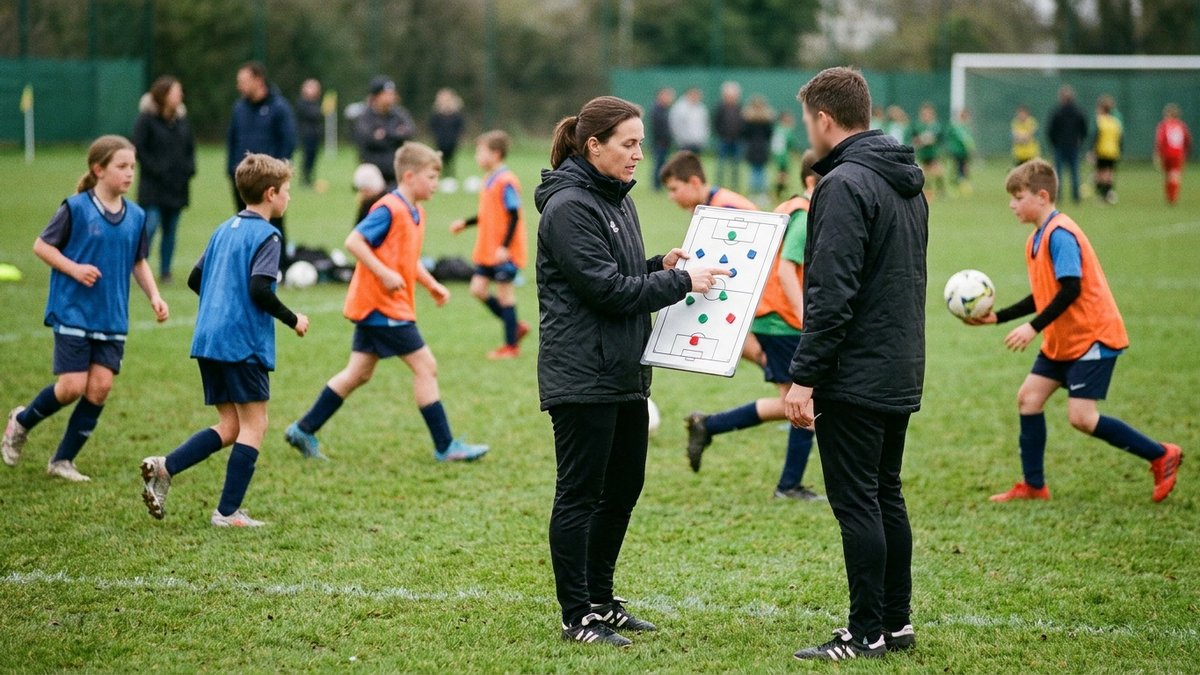
The Spanish federation does not coach every child in Spain. That is exactly why its role matters.
A federation can set standards, build education pathways, connect regional organizations, and give coaches a shared language. It cannot make every club use the same drill or produce the same kind of player. It can make the system less disconnected.
What does the RFEF actually control?
The Royal Spanish Football Federation runs national teams and its training department. Its La Academia platform brings RFEF training under one umbrella and involves regional federations through their schools and coaches’ committees.1
That does not mean Spanish football is a single machine. Club methodologies vary, as Gordo notes in his FIFA Training Centre interview.2 The value is the connection between different parts of the system. A coach can see a pathway for education. A regional federation is part of the training network. Youth national teams can work from a recognizable identity.
Why does coach education matter so much?
The player only receives the model through the coach in front of them. A club can write a beautiful development document, but it means nothing if a volunteer coach does not know how to make a 7v7 session age-appropriate or how to coach a player through a mistake.
The RFEF says La Academia includes courses, congresses, workshops, seminars, e-learning, and opportunities connected to regional federations.1 That does not make Spain perfect. It shows that coaching knowledge is treated as infrastructure, not an afterthought.
U.S. Soccer also provides coaching education and player-centered session material. Its Play-Practice-Play approach is built around game-like situations rather than long lines and activities disconnected from the game.3 The opportunity is to make that information easier to use in the actual environments where volunteer coaches work.
What does a fragmented system feel like to a family?
It feels like constant comparison with no common answer. One club says a player needs more touches. Another sells early selection. A third promises a higher league. Parents are left trying to judge development through standings, social graphics, and where other families are going.
That uncertainty feeds the anxiety that makes patient development difficult. If no one agrees on what progress looks like, a 2-1 loss can look like proof that the coach has failed.
The answer is not a national script for every team. It is clearer agreement on the basics: age-appropriate formats, meaningful playing opportunities, coach education, technical work, and a way to discuss progress that is more useful than a weekend result.
What could a U.S. club copy right now?
Create a club-wide coaching language. Pick a few words that every age group uses, such as “open body,” “support behind the ball,” “find the free player,” and “react after loss.” Teach the concepts at the right level for the age group, but keep the language familiar.
Then support the coach doing the work. Give them a session bank. Let them watch another team train. Give them a simple place to plan the roster and note what happened. A team manager workflow can keep attendance, lineups, and match notes in one place, which frees a coach to spend less time reconstructing the week from memory.
Use the Purpose, Evidence, Support handoff each week. Purpose is one player behavior the age group is learning. Evidence is one practice or match moment that shows whether it appeared. Support is the one thing the coach needs next, such as a smaller game, a second adult, or a clearer lineup note.
If one U10 player cannot receive with an open body, give that player a simpler pressure cue. If the whole group loses its shape after a turnover, adjust the activity and coach the shared response. If the coach has the right plan but no assistant during a 9v9 match, give the team manager ownership of the match-day record and the lineup and formation plan instead of adding another document.
Write the handoff before the next session. A shared standard is useful only when it changes what the adults do with the players in front of them.
What should a club avoid standardizing?
Avoid turning a development model into a rulebook that coaches are afraid to question. An U8 coach and an U15 coach should not use identical activities. A team with six new players needs a different starting point than a group that has trained together for three years.
Standardize the purpose, not every movement. A club can expect players to be involved, coached with respect, and given age-appropriate challenges. It can expect coaches to prepare sessions and communicate clearly with families. It should leave room for coaches to respond to the players actually standing in front of them.
That is the part parents often miss when they shop for a club identity. A real identity does not mean every team looks identical. It means the adults share a few non-negotiable ideas about how young players are treated and taught.
How can regional coach support help?
The coach closest to the players usually needs the most practical support. A short field observation, a chance to watch another coach, or a post-session conversation can do more than a once-a-year presentation. Regional groups are close enough to see common problems and share solutions that fit local facilities, roster sizes, and competition formats.
RFEF’s approach includes regional federations through their schools and coaches’ committees.1 American clubs and state organizations can use the same basic idea without pretending their structures are identical: bring education closer to the coaches who need it.
What would this change on an ordinary week?
A coach would arrive at training with a clear age-group goal and a session that has been checked by someone who understands the game. An assistant would know the learning focus before the first whistle. A parent would hear why a player is trying a new role. After the match, the group would review a few useful moments instead of talking only about the score.
That does not require a national office at every field. It requires clubs to give coaching time, feedback, and shared tools the same respect they give uniforms, league registration, and recruiting. When those basics are missing, the coach is left to improvise under pressure. The player feels that inconsistency first.
The bigger point is simple. A federation or club cannot demand better players while treating the people who teach them as an afterthought.
What should leaders ask coaches?
Ask what part of the job is hardest right now. Is it planning? Parent communication? Keeping an uneven roster engaged? Teaching a technical problem with limited field space? The answer should shape the support a club provides.
Then ask what coaches are seeing in players over a season. Those observations belong in the development conversation. A club that only asks for results will receive result-driven coaching.
FAQ
Does the RFEF require every Spanish club to use the same style?
No. Spanish club methodologies differ. The shared identity discussed here applies to Spain’s youth national-team context.2
What is La Academia RFEF?
It is the RFEF’s training umbrella, with courses and learning opportunities that involve national and regional football structures.1
Is the United States starting from zero on coach education?
No. U.S. Soccer has coaching education and player-centered frameworks. The issue is making useful standards consistent and practical across a very large, varied ecosystem.
What should a club standardize first?
Start with a few age-appropriate player behaviors and a shared way to plan and review sessions. Do not begin with a complicated formation manual.
Sources
Footnotes
-
RFEF: La Academia, the new identity of its Training Department, September 23, 2025. ↩ ↩2 ↩3 ↩4
-
FIFA Training Centre: David Gordo on Spain’s playing style, March 4, 2025. ↩ ↩2
-
U.S. Soccer: Five Things to Know About Play-Practice-Play, February 2018. ↩
NEXT STEP FOR YOUR TEAM
Put the next coaching decision in one place.
See how Pitch Planner connects team setup, practice planning, lineups, substitutions, and match records for youth soccer coaches.