
If the team is stable
Use the planned window. Bring on the players with the fewest minutes and protect one organizer in the back line or central midfield.
Set the format, roster, and substitution windows in one place. When a player arrives late or the match gets messy, make the next change without losing track of minutes or position cover.
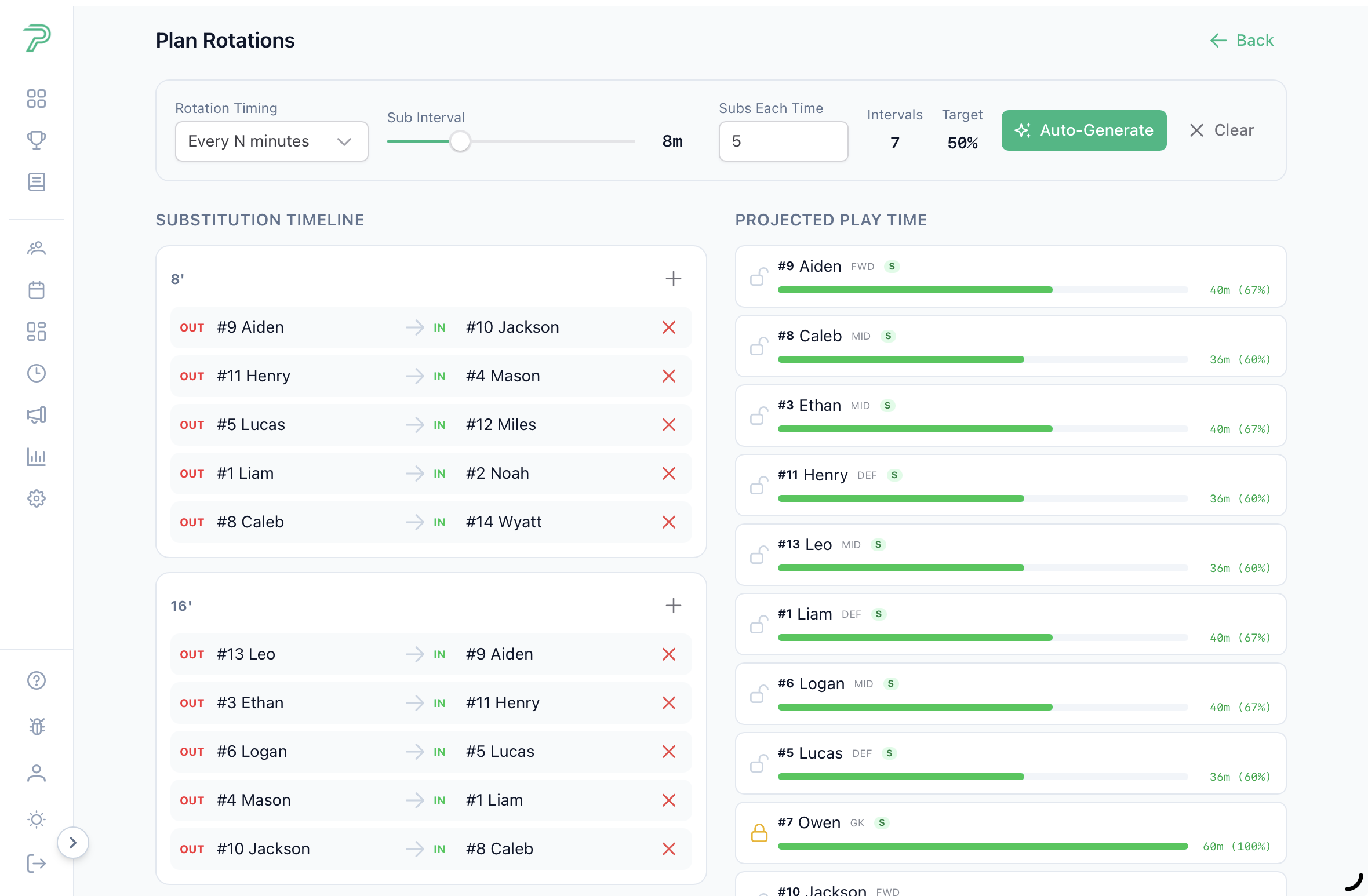
Your U10 7v7 team has twelve players at the field, so five players begin on the bench. The first change is due at eight minutes, but the central defender is still organizing a dangerous restart and one winger is already out of breath. Five minutes later, a late player arrives. The right response is not to throw away the whole chart.
Use the planned window. Bring on the players with the fewest minutes and protect one organizer in the back line or central midfield.
Delay or split the change until the next safe stoppage. Keep the position covered, then repair the minutes gap in the following window.
Add a late player or remove an injured player from the next feasible group. Keep completed minutes unchanged instead of restarting the rotation.
These are planning starting points, not universal league rules. Check the competition rule sheet for game length, legal substitution moments, goalkeeper handling, and minimum playing time before kickoff.
Common 4v4 development setups use no goalkeeper and short periods. Rotate field players at the quarter or period break, then use one planned mid-period change only if the roster makes the bench math tight. At this age, frequent role changes are easier to explain than a complicated position chart.
Decision test: If every player can enter for a complete period, use that simple rhythm. If the roster is larger than the available field slots, use the calculator to split the periods and write the next group beside the field.
For a 50-minute 7v7 match with twelve available players, six-to-eight-minute windows give the coach enough chances to move five bench players without changing the whole shape every few minutes. Rotate wide and attacking roles first, then protect the goalkeeper and one central organizer.
Decision test: If the team is building out cleanly, follow the next planned window. If the central defender is covering two spaces, keep that player on and repair the minutes in the next window.
Nine-player lines make the shape more important. Use eight-to-twelve-minute windows, rotate by line when possible, and avoid resting every central defender or midfielder at once. One player can carry the next connection while another line changes.
Decision test: If the team keeps its width and cover, make the planned change. If a new group would leave one line without a nearby outlet, split the change across two stoppages.
Full-sided soccer needs longer stretches for players to read the game. Plan by line instead of making hockey-style changes. Protect one center-back organizer and one midfield connection when a large group of substitutes enters.
Decision test: If the game is calm, use the next planned line change. If the score or field position makes a central change risky, keep the spine and use a wide or forward change first.
Enter your real roster and game length in the calculator. Print the first rotation sheet. Then answer one question with your assistant: who comes on if a player arrives late, and who stays on if the next change would expose the center?
After the match, compare the planned grid with the actual minutes. If one player missed a window, write the repair into the next match plan instead of relying on memory.
The useful part of a rotation plan is what it lets you decide when the match becomes unpredictable.
Build a named, printable rotation sheet from roster size and game length.
Tap actual substitutions and keep the player-minute record current.
Handle late arrivals, injuries, local rules, and parent questions.
Compare paper, spreadsheets, rotation tools, and live tracking.