
How To Rotate Soccer Positions Without Confusion
Use block rotations, stable roles, and clear parent communication so every youth soccer player gains experience without chaos.
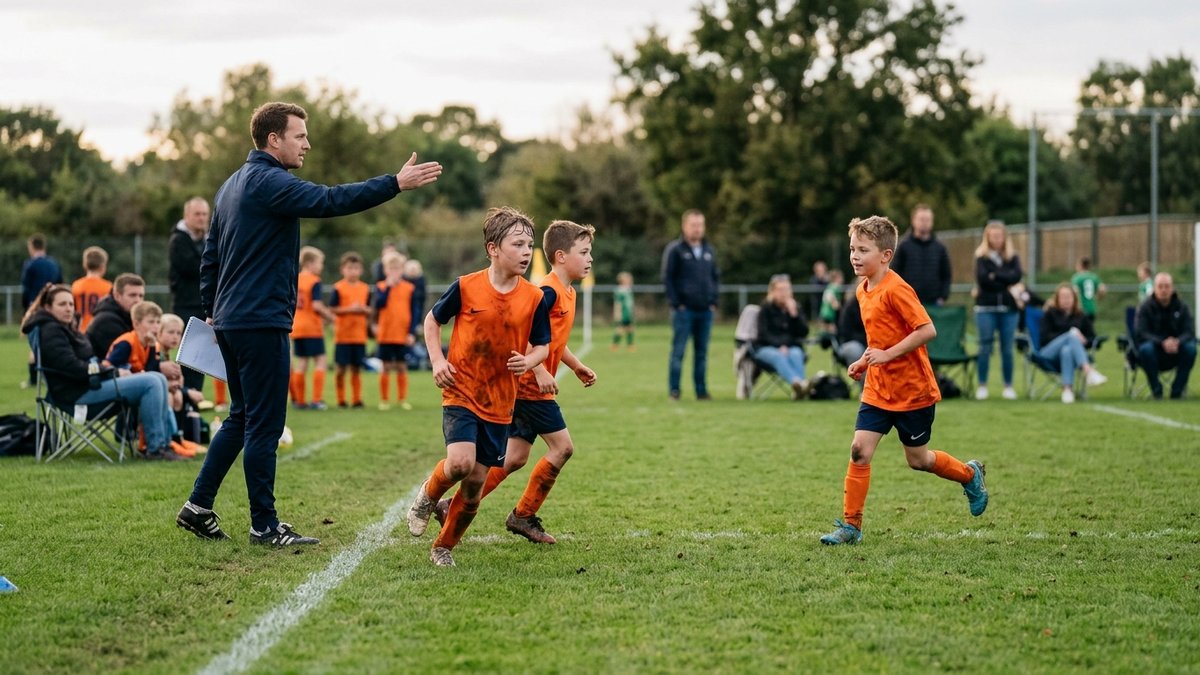
Thirteen players are dressed for a 9v9 match, two parents have already asked about midfield time, and your best defender wants a turn up top. Position rotation sounds fair until the first five minutes look scattered.
The best answer is not to move players everywhere at once. Give each player a clear primary role, add one secondary role, and rotate those roles in blocks that the team can understand.
What Is The Best Way To Rotate Youth Soccer Positions?
Block rotation is the best way to rotate youth soccer positions because it gives players repetition before they change roles. A player who gets three matches at fullback can learn spacing, pressure angles, throw-in support, and passing choices before moving into midfield.
That matters because youth players do not learn much from one random shift in a new spot. They need enough game pictures to recognize patterns. U.S. Soccer’s Play-Practice-Play guidance points coaches toward player-centered learning and game-like decisions. That fits a planned rotation better than a sideline scramble.
Use the Two-Role Block as your working framework. Each player has one primary role for the current block, one secondary role for controlled exposure, and one protected team spine that changes slowly.
The protected spine is usually your goalkeeper plan, one central defender, one central midfielder, or one forward reference point. You do not need all of those players locked in place. You just need enough familiarity that the rest of the team recognizes its shape.
For a U10 team playing 7v7, that might mean two players work mostly as defenders for three games while wide players alternate between outside back and winger. One or two players get midfield turns each match. The team still has a recognizable shape, and every player knows why the move is happening.
If you already plan lineups digitally, make the rotation visible beside the formation. The lineups and formations help guide is a useful place to start when you want the position plan to match the shape on match day.
How Long Should Each Position Block Last?
Most youth teams should use either a 3-game block or a 4 to 6 week block. The right length depends on age, roster size, schedule rhythm, and how much practice time you have between matches.
Three games works well during a crowded season because players get repeated match moments quickly. A defender sees pressure from different opponents. A midfielder feels what happens when the team is tired. A winger learns that wide play is not just sprinting forward.
Four to 6 weeks works better when your team trains often and plays once on the weekend. You can introduce the role in practice, reinforce it through small-sided games, then let the player use it in matches.
Younger teams can rotate more broadly. U8 and U10 players should see many field roles because they are still learning the whole game. Older players can narrow toward a primary position while still keeping one or two secondary roles.
Roster size changes the math. A New York State Youth Soccer Association summary of US Youth Soccer roster rules lists maximum roster sizes by age group. It lists 16 for 10U and below, 18 for 11U and 12U, and 22 for 13U and older. Bigger rosters need a written plan because memory will fail under match pressure.
The same planning habit helps with substitutions. If position exposure and minutes both matter, track them together instead of treating them as separate chores. Coaches who use the playing time tracker can connect role changes with bench time before a parent asks about either one.
How Do You Keep The Team From Looking Disorganized?
Change one role group at a time if you want the team to stay organized. Rotation breaks down when the coach moves the back line, midfield, and goalkeeper all in the same half.
Start with units. Rotate wide players between fullback and winger. Rotate center midfielders with attacking midfielders. Let forwards try winger before asking them to play center back.
That order gives players related pictures. A winger who learns fullback starts to understand the space behind them. A midfielder who tries striker learns why early passes matter. The rotation becomes soccer education, not a fairness chart with cleats.
Keep goalkeeper rotation separate from outfield rotation when possible. Goalkeeper is emotionally different for many young players, especially if mistakes draw loud reactions. Give lower-pressure keeper reps in scrimmage before asking a player to take that role in a league match.
Use a short role cue for each position. A fullback cue might be to get wide in possession. A midfielder cue might be to check shoulders early. One cue sticks far better than a lecture.
Then repeat the cue during training. Position rotation should not debut at kickoff. If Saturday is the first time a player hears their new role, the team confusion is partly on the coach.
What Should You Tell Parents About Position Rotation?
Tell parents that rotation is a development plan with blocks, roles, and review points. Do not wait until a parent believes their child was moved because of ability or punishment.
Before the season or the next block, send a short note. Explain that players will have primary and secondary roles, that blocks give them time to learn, and that you will avoid changing too many players at once.
Be specific without promising equal time in every position. A good parent note can say that every player will receive meaningful exposure across the season, while safety, attendance, roster balance, and league rules still matter.
The 2026 to 2027 youth soccer age-group shift adds another reason to communicate clearly. US Youth Soccer has said its league and Cup competitions will move to the August 1 through July 31 seasonal year. Families may already be hearing new terms about team makeup, so a calm rotation plan reduces another source of confusion.
Do not frame rotation as a reward for the strongest players or a favor to quieter players. Say what each role teaches. Fullback teaches angles and patience. Midfield teaches scanning. Forward teaches timing and pressure.
If a team manager helps with messages, make sure they have the same language you use on the field. The coach and manager roles guide can help split the planning and communication work without mixed messages.
How Can You Track Position Experience Across A Season?
Track position experience with a simple season grid that records primary role, secondary role, minutes, and notes. The point is not paperwork. The point is seeing patterns before they become parent concerns or player frustration.
Make one row per player. Add columns for each block, then write the primary role first and the secondary role second. A row might read: defender plus winger, winger plus midfielder, midfielder plus forward.
Add a note when attendance changes the plan. If a player misses two games during a midfield block, that player did not really receive the same experience as the teammate who played both matches. Your next block should account for that.
Review the grid every two or three matches. Look for players stuck in one area, keeper turns that are piling onto the same child, and strong players who never leave comfortable roles.
This is also where the Two-Role Block protects you from overcorrection. You do not need to fix every imbalance immediately. You need a visible next chance that keeps the team steady.
When a player asks to try a new role, the grid gives you a better answer than a vague “maybe next week.” Tell them their secondary role for this block. Then name the next role you will review. That answer feels fair because it has a place on the plan.
The role-block test
Choose one primary role and one learning role for each player in the next block. If the player can make the intended decision in the new role, keep the block long enough for another repetition. If the role creates confusion or unsafe spacing, return to the primary role and change the practice constraint before trying the position again in a match.
FAQ
Should Every Youth Soccer Player Try Every Position?
Most younger youth players should try many field positions, especially through small-sided ages. As players get older, it makes sense to keep one primary role while still giving them secondary roles for flexibility.
How Often Should Goalkeepers Rotate?
Goalkeeper rotation should move more carefully than outfield rotation. Use practice reps and short blocks first, then match time when the player understands the basics and feels ready.
What If A Player Refuses A New Position?
Start by asking what worries them about the role. Then give one clear job for the first shift, such as staying goal side or checking shoulders before receiving.
Should Strong Players Stay In Their Best Positions?
Strong players can anchor the team at times, but they still need broader soccer pictures. Give them development roles in planned blocks instead of moving them only when the game feels safe.
How Do I Handle Parents Who Want One Position?
Explain the block plan and the soccer reason behind each role. Keep the conversation about learning, team shape, and season-long experience rather than one match assignment.
Before the next game, write every player’s primary and secondary role for the next three matches. Circle the small spine you want to keep steady. Then tell the team the plan before warmups, not after the first confused substitution.
NEXT STEP FOR LINEUPS
Build the shape before the first whistle.
Choose the formation, assign player roles, and keep the saved lineup close when match setup starts.