
How To Organize Youth Soccer Match Day
A practical match-day system for youth soccer coaches to manage arrivals, roles, substitutions, and parent communication.
Published · Updated
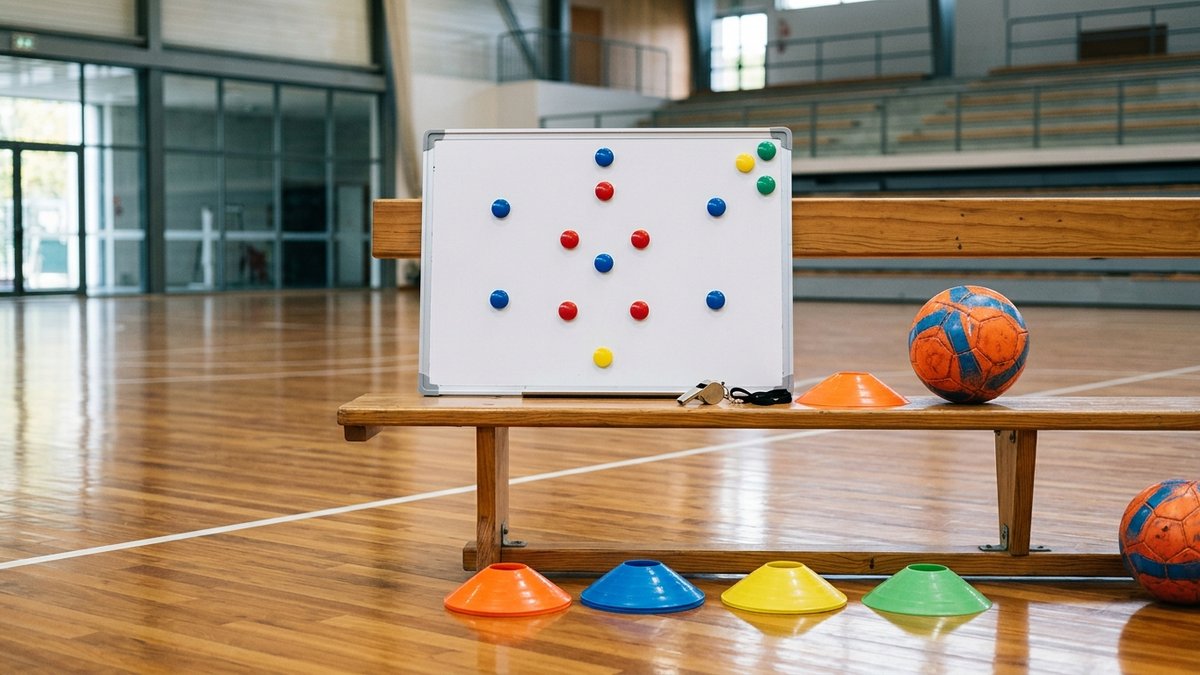
Match day gets messy when every decision waits until kickoff. One player is late, a parent asks about jersey color, and your assistant forgets who starts at center back.
The best match-day plan gives players, coaches, and families structure before the whistle. It does not remove every surprise. It keeps surprises from taking over.
What Should A Youth Soccer Coach Prepare Before Match Day?
Prepare the roster, arrival details, starting lineup, substitution plan, and family message before anyone reaches the field. Those five items stop most sideline confusion before it starts.
Start with attendance because every other decision depends on who is actually available. If you expect 12 players for a 7v7 match, your plan looks very different from a day with nine players and one late arrival.
Use a single source of truth for availability. A shared text thread can work, but it often gets buried under parent replies.
Pitch Planner’s attendance tracking guide is useful because it frames availability as a roster planning step, not a separate admin chore. That matters when you are trying to balance roles and minutes.
Next, write down the field location, arrival time, uniform color, and who handles player check-in. Keep the message short enough that families can read it in a parking lot.
Then build your soccer plan. Name the starting formation, starting positions, first bench group, and first two substitution windows.
This is where the Four-Touch Match-Day Framework helps. Every game plan should touch the roster four times: attendance, roles, rotations, and review.
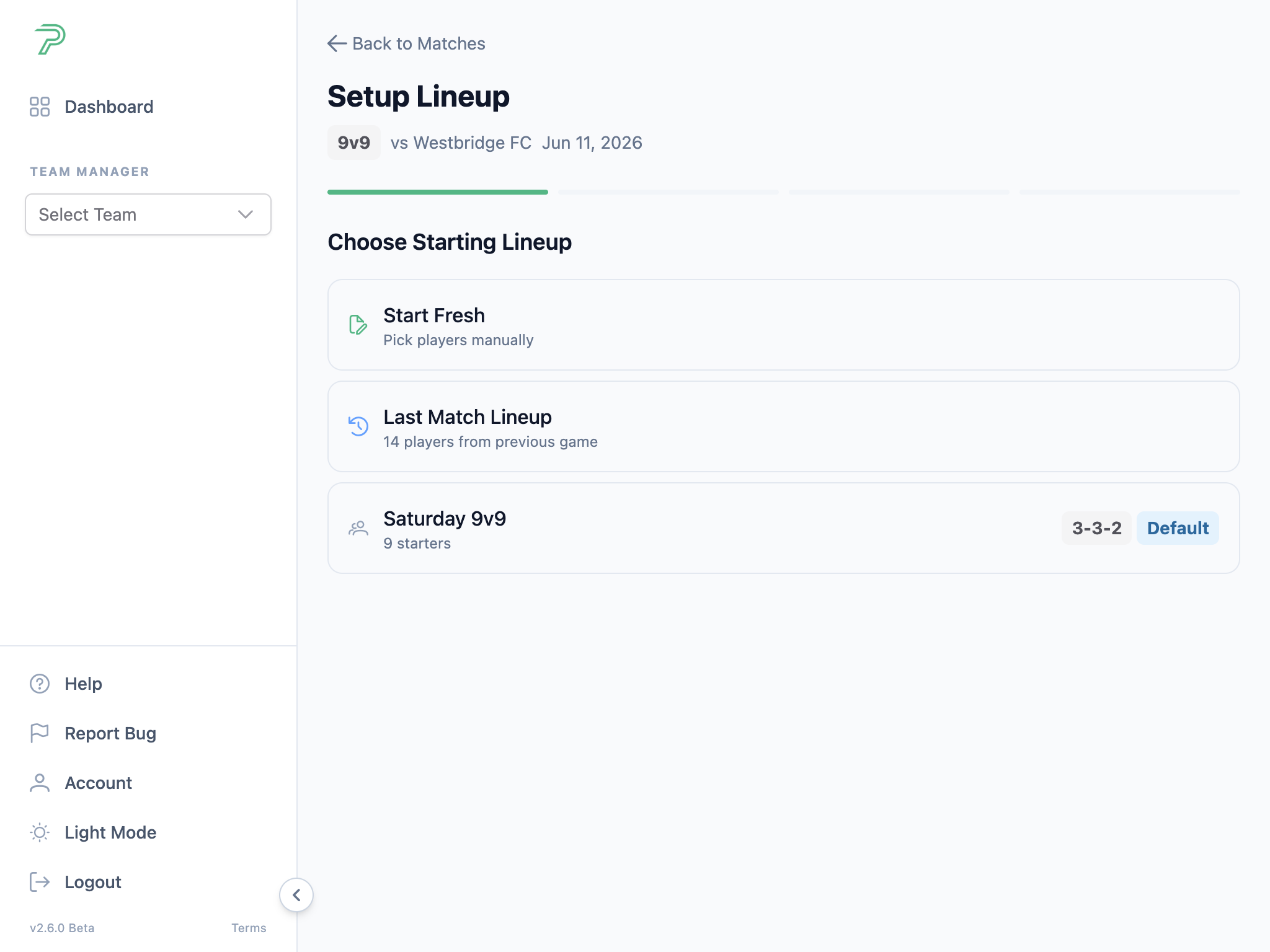 Start match day by choosing the lineup source before you move into player selection, roles, and rotations.
How Do You Keep Substitutions Smooth During A Youth Soccer Game?
Use a written rotation plan with time blocks, position coverage, and a next-player-up option. A coach should not need to solve every substitution from memory.
For younger teams, blocks are usually easier than minute-by-minute perfection. You might plan changes around the middle of each half, water breaks, or natural stoppages.
The key is knowing who comes off, who goes on, and which position stays covered. If your right back comes off, someone must understand that role before stepping in.
Substitution mechanics also matter. IFAB Law 3 says substitutes enter during a stoppage and with the referee’s permission. Your local league may add youth-specific re-entry rules, so check those rules before the season.
Do not make the bench solve the plan for you. Tell the next group early. A calm phrase like “next shift, midfield and striker” gives kids time to listen.
It also helps to separate the playing-time goal from the tactical goal. One line on your sheet can track minutes. Another can track positions. That keeps fairness visible without flattening every soccer decision into equal chunks.
When a player is late, injured, or overwhelmed, use your next-player-up note. If your starting left back is absent, your backup might be the left midfielder.
How Should Coaches Assign Player Roles Without Confusing Kids?
Assign each player one starting job and one backup job for the day. Youth players handle roles better when the instructions are short, specific, and repeated.
“You start at center mid” is helpful. “Win the first pass, then recover behind the ball” is better. It gives the player a role and a cue.
Avoid giving every player a full tactical lecture. A nine-year-old winger needs the first job, the shape cue, and permission to ask again.
Use the same language in your lineup sheet and pregame huddle. If your sheet says “right defender,” do not switch to “outside back” unless the team already knows both terms.
Pitch Planner’s lineups and formations help page can support this because it keeps formation choices tied to actual player spots. That helps coaches avoid vague plans like “play wider” with no role attached.
For 7v7, the biggest risk is losing shape after substitutions. A new defender runs forward, a midfielder forgets to slide, and the goalkeeper has no passing option.
For 9v9 and 11v11, the risk shifts toward communication between lines. If your holding midfielder rests, the replacement needs one clear instruction.
Role assignments also reduce parent questions. It is easier to answer concerns when each player has planned minutes and a real role.
What Is The Best Way To Communicate With Parents On Game Day?
Use one channel, one message owner, and one pregame note that covers logistics before tactics. Parents need clarity, not a coaching manual.
Many match-day problems start outside the touchline. A family arrives at the wrong field. A player forgets shin guards. A manager thinks kickoff is 20 minutes later.
Choose one adult to own family updates during the match window. The head coach should not be the only person answering messages during warmups.
The pregame note should cover arrival time, field number, uniform color, water needs, and pickup routine. If weather matters, put it near the top.
Keep playing-time communication calm and consistent. You do not need to announce every rotation to parents. You should be able to explain your process if asked.
Families respond better when they know the team has a plan. “We track roles and rest windows each game” is clearer than “everyone will get time.”
If a parent has a concern, move it out of the heat of the sideline. A longer playing-time conversation belongs away from the field.
How Can A Coach Handle Late Arrivals And Missing Players?
Build a backup lineup before the game, then adjust once attendance is confirmed. Late arrivals should not force a sideline rebuild.
Start by marking every player as confirmed, questionable, or out. Questionable players should not be placed in roles that break the whole formation if they miss warmups.
Do not make a questionable player your only goalkeeper plan. Do not put an uncertain arrival into the first center back pairing.
Use a simple rule for late players. A player who misses warmups may start on the bench, then enter at the first planned rotation. That keeps the team organized without turning the situation into a punishment.
Missing players also affect fairness over the season. A child who covers an emergency position should not get stuck there forever.
The Four-Touch Match-Day Framework handles this in the review touch. After the game, record who played where, who rested, and what changed.
How Do You Review Match Day Without Creating Extra Work?
Review the game with a two-minute note before you leave the field. The goal is to capture useful facts while they are still fresh.
Write down final attendance, unusual substitutions, position changes, and any parent or player follow-up. Do not write a full match report.
This small habit protects future planning. If one child sat too long, you can correct it next match.
It also helps with player conversations. “You tracked back well at right midfield” is better than “good hustle.”
For teams that track minutes, use the review to check whether the plan matched the game. Pitch Planner’s time tracker setup guide can help coaches turn sideline notes into a repeatable routine.
Keep the review private and practical. It is for better coaching, not public scoring of children.
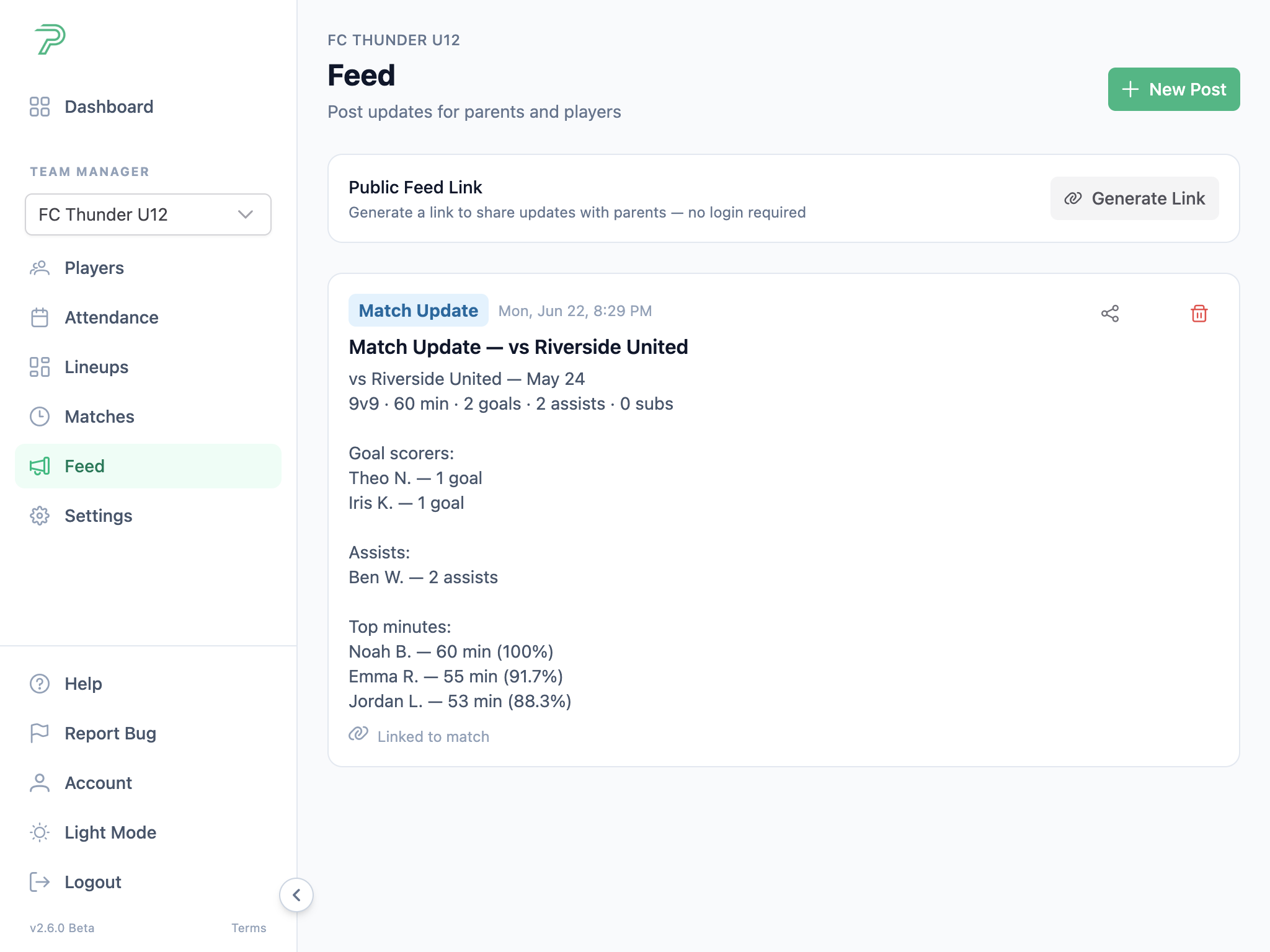 After the match, a short feed update can share the useful recap without turning parent communication into extra admin work.
The four-touch match check
Run the plan at four moments: attendance before warmup, roles before kickoff, rotation at the planned window, and the record at halftime. If attendance changes, update the bench before setting the rotation. If the match changes but the roster does not, adjust the next decision and preserve the completed record. End with one note that changes the next practice or lineup.
How To Organize Youth Soccer Match Day FAQ
How Early Should Youth Soccer Players Arrive Before A Game?
Most teams should arrive early enough to check attendance, warm up, and hear roles without rushing. The exact time depends on age, venue rules, and whether the team needs equipment setup.
For younger teams, a shorter focused arrival window often works better than a long wait. The key is making the expectation clear before families leave home.
Should Every Player Know The Substitution Plan Before Kickoff?
Players should know the basic rotation plan, but they do not need every possible adjustment. Tell them where they start, what their first job is, and when the first changes may happen.
If plans change, explain the change in short language. Kids handle adjustments better when the original structure is clear.
What Should A Team Manager Handle On Match Day?
A team manager can handle family logistics, attendance reminders, field updates, and non-tactical messages. That lets the coach focus on warmups, roles, and in-game decisions.
The manager should know which messages need coach input. Anything about playing time, discipline, or player roles should stay with the coach.
How Do You Keep Playing Time Fair When The Game Gets Chaotic?
Track rest windows and positions during the game, even if the match changes your original plan. A written record helps you see what actually happened.
Fairness does not mean every player gets the same role every week. It means the coach can explain the plan and correct imbalances over time.
What Should Coaches Do After A Badly Organized Match?
Write down what broke, then fix one system before the next game. Do not try to redesign the whole team process at once.
If substitutions caused the problem, build a clearer rotation sheet. If parent messages caused the stress, assign one communication owner.
The next match day should start with one page: attendance, roles, rotations, and review notes from last week. That is enough structure for most youth teams.
A calm game plan gives you room to coach the players in front of you. Before your next match, write the Four-Touch Match-Day Framework at the top of your sheet and fill in each touch before kickoff.