
Match Play Is Not a Training Plan
Youth players need games, but a practice made only of match play can leave technical gaps and give coaches no clear way to teach what the game exposes.
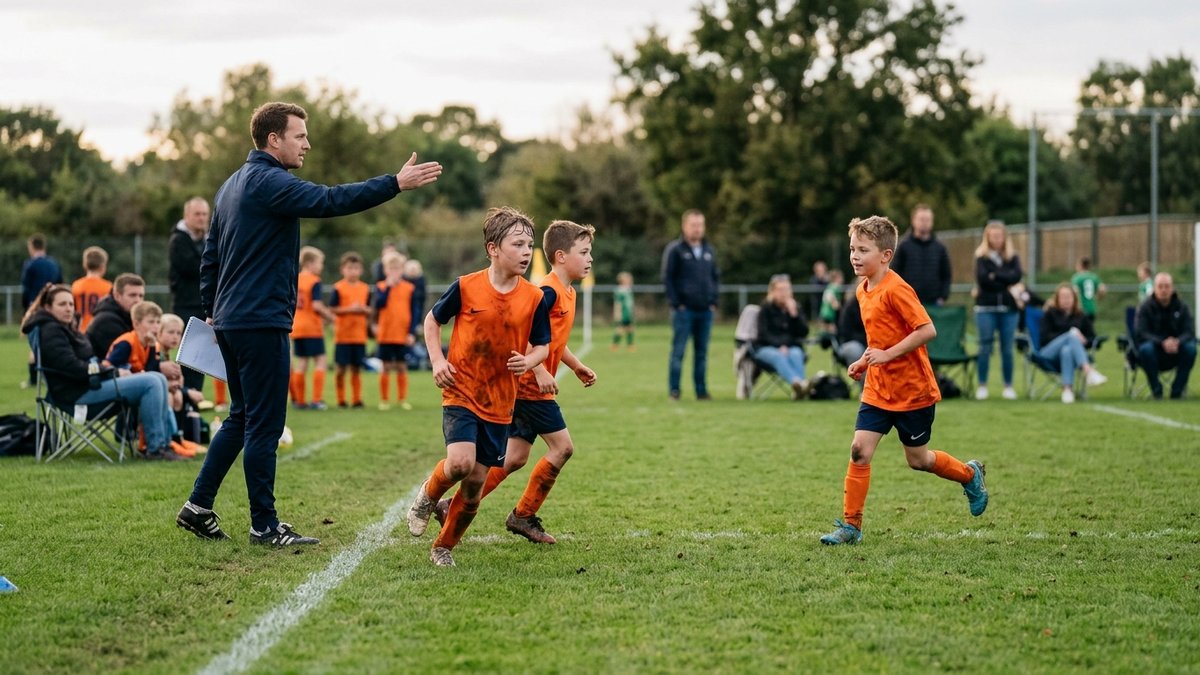
There is a version of youth practice where the coach rolls the ball out, splits the group into teams, and lets the clock run. The players sweat, the adults call it competitive, and everybody goes home feeling like training happened.
Sometimes that is exactly what a group needs. Most weeks, it is not enough.
Why is a full scrimmage not enough?
A full scrimmage can hide the exact problems a coach needs to teach. The confident player touches the ball most. The player who struggles to receive it may avoid the ball. The defender who always clears it may look busy while never learning to open the body, scan, or find a pass.
The game still gives the coach information. That is valuable. But information is not instruction. If a coach sees that the group cannot combine through midfield, the next step cannot be another thirty minutes of hoping they discover it alone.
U.S. Soccer’s Play-Practice-Play model uses a game to expose a problem, focused practice to work on it, then a return to the game so players can apply it. FIFA’s grassroots guidance uses the same basic progression for young players: play, repeat a skill with purpose, then use it in open play. The structure matters because it gives the player a bridge between an isolated action and a real decision.
What does a useful youth session include?
A useful youth session includes a game problem, enough repetition to work on it, and a game that asks whether it transferred. The exact activity can change by age, numbers, space, and ability. The purpose needs to stay visible.
Say an U10 group keeps losing the ball on the first touch. Start with a 4v4 game where the right-sided player receives beside the touchline with a defender closing from inside. Move into an activity that asks players to check a shoulder and take the first touch away from that pressure. Finish with the same 4v4 game, where a team earns an extra point when a player receives, turns, and connects a pass.
Use the Expose, Isolate, Return test to decide what happens between those games. Expose the problem in live play and count who meets it. Isolate the smallest decision that keeps breaking. Return to the original game and watch whether the choice survives pressure.
If one player keeps receiving square to the touchline, then give that player one shoulder-check cue and another repetition. If three players make the same closed-body first touch, then widen the channel or slow the first defender so everybody can see the passing picture. The first branch treats an individual read. The second changes the practice design.
The coach is not removing fun by adding a theme. The coach is giving the game a reason. Players still compete. They still solve problems. They also get more chances to repeat the action that was disappearing during the big scrimmage.
FIFA’s U10 coaching example combines ball control work, 1v1 and 2v1 situations, and a small-sided game so players can use the skill under pressure. That is a better model than choosing between drills and games as if one has to win.
Does focused practice mean lines and boring drills?
No. Focused practice should still look and feel like soccer. Long lines, repeated unopposed actions, and a coach talking for five minutes will lose most young players. The answer is not to abandon teaching. It is to design activities with more balls, smaller groups, and decisions that appear quickly.
Use two or three small grids instead of one large one. Give players a defender, a target, a direction, or a scoring condition. Keep the waiting time short. Let a player try the action again after a mistake instead of sending that player to the back of a line for six minutes.
The best activities make the technical action matter. A pass has a destination. A first touch has pressure behind it. A dribble changes the picture. Players do not need a lecture about why technique matters when the activity makes the consequence obvious.
This is why a soccer session planner can help. It gives the coach a place to write the game problem before the group arrives, rather than standing at the field and defaulting to a scrimmage because the week was busy.
When should a coach let players simply play?
Coaches should let players play in every session. The problem is treating “let them play” as a substitute for observing and teaching. Open play helps children experiment, enjoy the game, and show the coach what they can do without a script.
The coach can watch for one or two things. Are players creating angles to support the ball? Can they recognize when to dribble or pass? What happens when possession changes? That observation should shape the next activity, not turn into a running list of shouted corrections.
There are days when a group needs more free play. A team coming off a tournament weekend may need a lighter session. A young group may need time to reconnect with why they like the sport. The coach can make that choice on purpose. It is different from showing up with no plan at all.
How can match play reinforce a learning goal?
Match play reinforces a goal when the rules or prompts make the goal visible. If the theme is supporting the player on the ball, use a small-sided game with wide channels or end zones that reward finding a teammate in space. If the theme is playing forward after winning the ball, add two mini-goals and ask the group to attack quickly after a turnover.
Do not create a maze of rules. One condition is usually enough. Explain it in a sentence, let the players play, then ask what they saw. A question such as “Where was the next pass after you won it?” keeps the attention on the game without turning the coach into a commentator.
The coach should also think about roles. A player who needs work receiving under pressure will not improve much if that player spends every game far from the ball. A simple lineup and formation plan can help the coach give players an appropriate challenge instead of putting the same confident group in the decision-heavy spots every week.
What should a parent see when practice is working?
Parents should see active children, lots of ball contact, and a coach who has a reason for the activity. They may see mistakes. A training session where players never lose the ball is usually too easy or too controlled.
What parents should not expect is a perfect scrimmage every night. A group learning to receive with an open body may look awkward before it looks fluid. A team learning to play through pressure will give the ball away in bad places. That is not proof the coach is wasting time. It is proof the players are doing something harder than a safe clearance.
Tell families the theme when it helps. “We are working on first touches away from pressure tonight.” That one sentence can keep adults from judging the whole session by the final score of a five-minute game.
Pitch Planner’s youth-development position is not against competition. It is against pretending a match by itself will teach every player what the game exposes.
At the next session, count the first five wide receptions in the opening game. Mark whether each player checked inside before the ball arrived. Use that visible result to choose an individual cue or an activity change, then repeat the same count in the closing game.
FAQ
Should every practice end with a scrimmage?
Most youth sessions benefit from a game at the end, but the format can be small-sided and connected to the theme. The goal is application, not only a long full-field match.
How long should the focused practice section last?
Use enough time for players to understand and repeat the action. Younger groups often need shorter activities and frequent changes. Watch engagement and adjust.
Can a coach use drills at all?
Yes. A drill can help when it gives players useful repetition and connects to a game problem. Avoid drills that create long waits or never ask players to make a decision.
What if the team only has one practice each week?
One practice makes the plan more important. Pick one clear theme, keep the activities small and active, and give players a way to use the theme in a game before they leave.
NEXT STEP FOR PRACTICE
Put the next session on the field.
Turn the coaching idea into a usable session plan, then keep the player decision you want to see close to the activity.