
Rec Soccer Is Where Player Development Starts
Rec soccer is where young players should build comfort with the ball and the game, with better support for the volunteer coaches leading them.
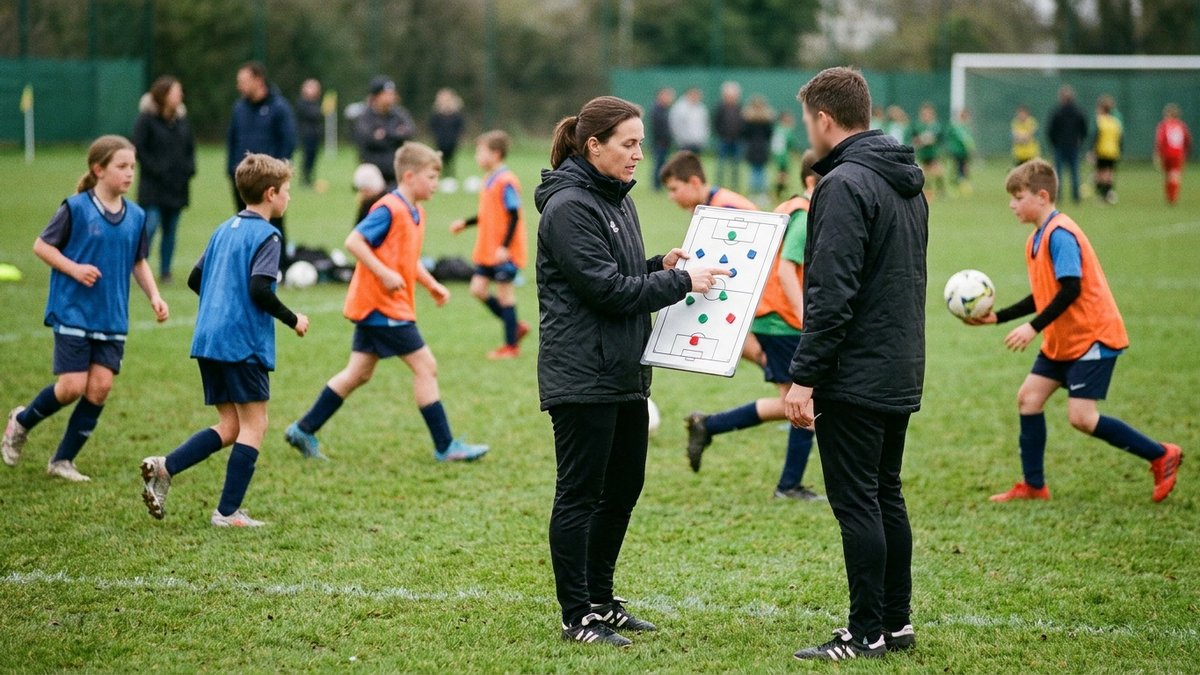
Rec soccer gets treated like the part young players have to survive before the serious soccer begins. That is backwards.
For a lot of children, rec is where they meet the ball, the team, the rules, and the feeling of being part of a game. It is where they decide whether soccer is fun enough to keep playing in the yard after practice ends. If that stage gives them little more than a weekly game and an adult who is guessing at the rules, clubs will inherit the consequence later.
Why does rec soccer matter so much?
Rec soccer matters because the first years decide how familiar a child feels with the game. A player who has spent time dribbling, turning, passing, shooting, and making small decisions is ready to learn more when competition gets harder. A player who has only chased the ball in crowded matches starts later, even if that player is athletic and eager.
U.S. Soccer’s small-sided standards were built around this basic idea. Fewer players mean more involvement, more touches, and more chances to read the game and make decisions. That is not a detail for elite clubs. It is the reason the early environment matters.
The goal is not to turn six-year-olds into academy prospects. It is to make the ball familiar and the game inviting. A kid who knows how to stop the ball, turn away from pressure, and look for a teammate has more ways to enjoy soccer. That player is also easier to coach later because the coach can add to a base instead of starting from zero.
Are parent coaches the reason players fall behind?
No. Most parent coaches step in because somebody had to. They are often asked to organize a roster, keep children safe, manage parent messages, learn the league rules, and lead a practice with no background in teaching soccer. Criticizing that volunteer misses the point.
The system should give those adults a better start. U.S. Soccer itself promotes beginner volunteer coaching guides that focus on age-appropriate expectations, fun, safety, and player development. The need for those guides says something important. A first-time coach can make a real difference when the coach gets practical support instead of a bag of pinnies and a kickoff time.
A useful rec program does not need every coach to be a former player. It needs a short orientation, a few repeatable session plans, a simple explanation of what each age group should practice, and someone a volunteer can ask when a session falls apart. The standard should be realistic. Can the coach create lots of ball contact? Can every child be involved? Can the group leave wanting to play again?
The Touch, Read, Return test gives that coach a field-level check. Count who touches the ball, watch what players notice before the touch, then see whether they return to the game after losing it. If one child barely touches the ball, then shrink the team size or split the field. If most players get touches but cannot find space, then add a direction, target, or defender.
Those are better early goals than an undefeated U8 season.
What should young rec players learn first?
Young players should learn to enjoy the ball and recognize a few simple game problems. They need repeated chances to dribble into space, stop and start, pass to a teammate, receive the ball under a little pressure, shoot, and react after losing it.
That does not require a line of children waiting for a turn to kick at an empty goal. It requires small activities where everyone has a ball or where each child is involved quickly. A 3v3 game with several small goals can teach more than a long scrimmage where two confident players get most of the touches.
FIFA’s grassroots guidance for ages four to eight uses a Play-Practice-Play approach. It starts with a game, includes focused skill work with repetition, then returns to open play where children can try the skill in a real problem. That structure is useful because it respects both parts of learning. Kids need to play. They also need time to work on a skill before the game gets chaotic again.
Parents can help outside of formal practice too. A ball in the driveway, a passing game at a park, juggling in a hallway, and five minutes of turning away from a sibling all count. The point is not to create another expensive assignment. It is to make the ball ordinary.
What should clubs expect when players arrive at 7v7 or 9v9?
Clubs should expect a wide range of experience. Some players will have played constantly. Some will be new. Some will have had great rec coaches. Some will have spent years in environments with no real instruction. A good club meets the player in front of it.
But a club should not accept the gap as normal and then spend every training session playing an unplanned match. If a group cannot receive cleanly, pass with the right weight, strike the ball, or understand basic spacing, those are not embarrassing problems. They are the session plan.
The mistake is pretending the group is ready for complex tactics because the roster is now called 9v9. Formation language can make adults feel organized. It does not give a player a first touch. Build the technical base while the players learn wider spaces and more positions. A thoughtful session plan lets a coach keep the game present without hoping the game teaches every missing piece on its own.
How can a rec league improve without becoming expensive?
A rec league can improve by putting support where it changes the player experience most. Start with volunteer coaches. Give them one short preseason meeting, age-based practice cards, a shared equipment plan, and a simple weekly theme. Let experienced coaches mentor new ones for ten minutes after a session instead of expecting a full license course before anyone can help.
Keep the format small. Use more small fields and more small goals when possible. Reduce lines. Put a ball at every player’s feet during the first part of practice. The same principles can work in a park with cones and two portable goals.
The league can also publish a clear youth development position so volunteers know why involvement and ball comfort matter before weekend results. That shared reference helps a new coach defend a 3v3 activity when an adult expects a full-sided scrimmage.
Make parent communication part of the program. Explain that the early goal is involvement, enjoyment, and basic ball comfort. When families understand why a coach is using 3v3 games instead of a long adult-shaped match, they are less likely to mistake activity for a lack of seriousness.
Pitch Planner was built to manage match-day lineups and minutes, but our philosophy starts right here in rec soccer. Every child deserves a real chance to play, touch the ball, and grow without adult panic getting in the way.
What can a parent coach do at the next practice?
Start with the ball, not a speech. Give every child one. Ask them to dribble through a small area, stop on a signal, change direction, and find space. Then play a small game with teams that are small enough for every player to touch the ball.
Choose one thing to notice. Maybe it is a player using the outside of the foot to turn. Maybe it is a player looking up before passing. Say the player’s name and point out the action. Children learn faster when feedback tells them what worked, not only what went wrong.
Then end with a game and let them play. A volunteer coach does not need to deliver a perfect session. The coach needs to make the next session better than a long line and a lecture. For a starting structure, use a beginner soccer practice plan and change it to fit the group in front of you.
At the next practice, tally one touch for each player during the first small-sided game and change the activity if the same children stay outside the play.
FAQ
Does rec soccer have to teach advanced tactics?
No. Rec soccer should teach children how to enjoy the game, use the ball, and solve simple problems. Tactics can grow as the player’s technical comfort and game understanding grow.
Can a player still develop after starting late?
Yes. Players can learn at every age. Early ball contact gives them more time to build on the basics, but a late start does not decide a player’s ceiling.
Should rec teams only play small-sided games?
Small-sided games should be a major part of early development because they create more involvement. The exact format should fit the age group, space, and number of players available.
What makes a good volunteer coach?
A good volunteer coach keeps children safe, involved, and willing to come back. Soccer experience helps, but preparation, patience, and a simple plan matter more than pretending to know everything.
NEXT STEP FOR YOUR TEAM
Put the next coaching decision in one place.
See how Pitch Planner connects team setup, practice planning, lineups, substitutions, and match records for youth soccer coaches.