
Track Youth Soccer Goals And Assists Without Distraction
A simple youth soccer stat-tracking workflow for goals, assists, shots, saves, and notes without pulling coaches away today.
Published · Updated
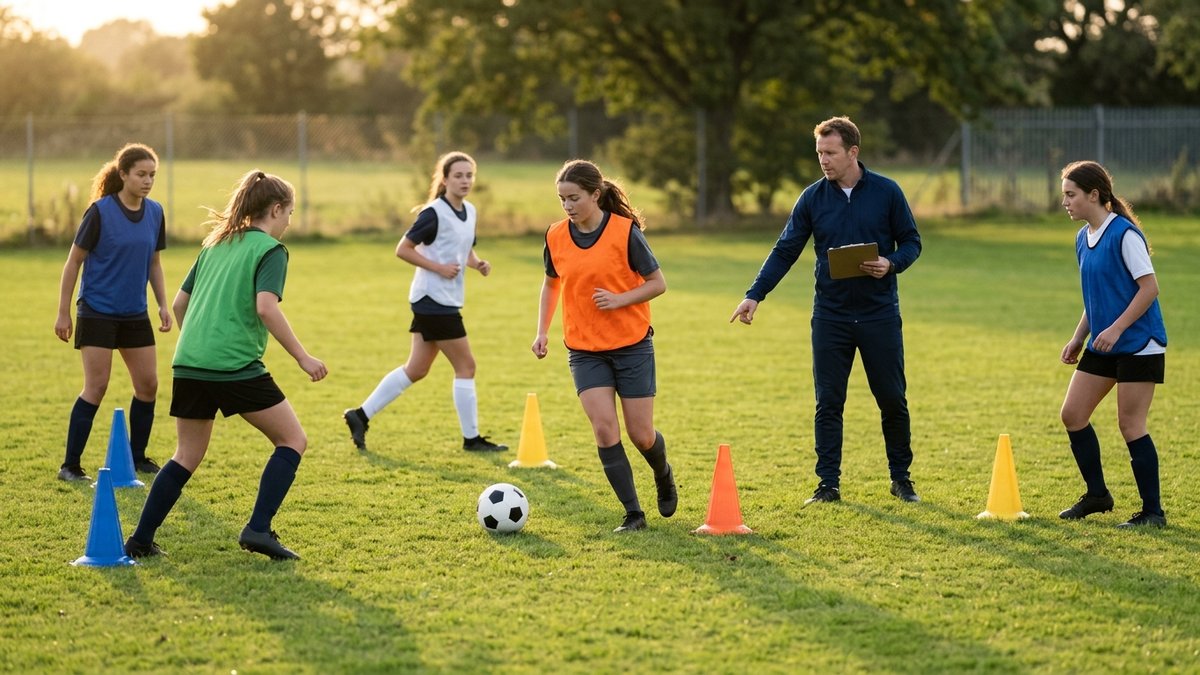
You want useful game stats, but you also need to coach the game in front of you. That tension shows up fast on a youth soccer sideline. A goal happens, three subs are waiting, a parent asks about minutes, and the next kickoff is already moving.
The answer is not a bigger live stat sheet. It is a smaller one, a clearer handoff, and a post-game routine that turns quick marks into useful notes.
What Stats Should A Youth Soccer Coach Track During A Game?
Track only the stats you can record accurately without pulling attention from coaching. For most youth teams, that means goals, assists, shots, shots on goal, saves, minutes played, positions played, and a few clear defensive actions.
The goal is not to build a professional analytics department on a folding chair. The goal is to keep a clean record that helps you review the match, praise specific effort, and answer basic parent questions with less guesswork.
A simple starter sheet should include every player number, a column for goals, a column for assists, shot marks, goalkeeper saves, and one space for notes. If you already track playing time, connect the stat sheet to your substitution record. That makes the numbers more useful because context matters.
For example, a player with one shot in eight minutes at striker had a different game than a player with one shot in a full half at midfield. A goalkeeper save during heavy pressure also tells a different story than a routine pickup.
U.S. Soccer Players recommends a clipboard, stopwatch, and field diagram for youth stat keeping. That is a useful signal for coaches. Start with events that are easy to see and hard to argue about.
Use Pitch Planner’s goals and assists tracking guide when you want the post-game record to stay tied to your roster. The live sideline sheet can stay light, while the season record stays organized.
This is the “Small Sheet, Clean Story” framework. Keep the live sheet small enough to complete, then use it to tell a clean story after the game.
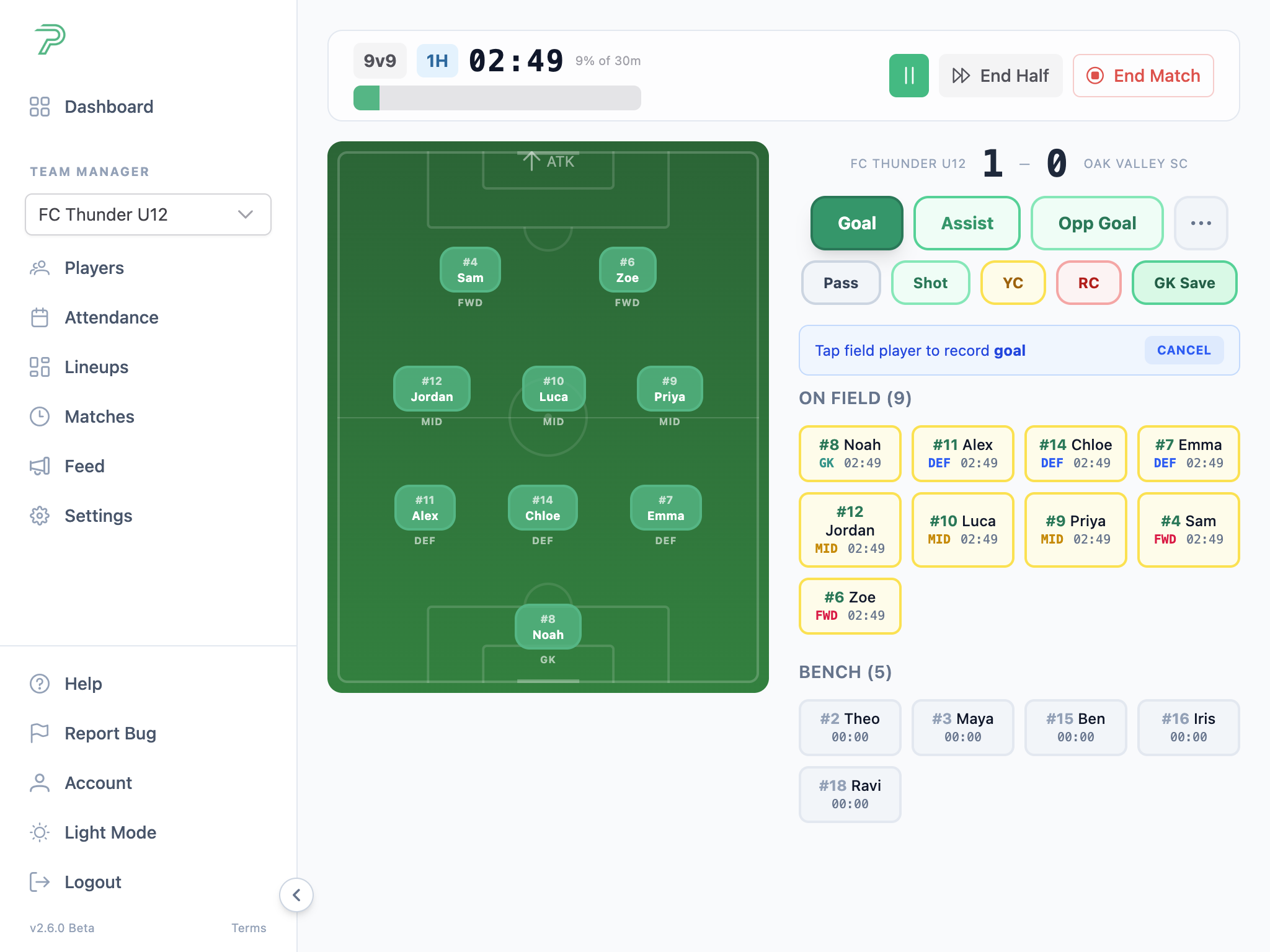 For live stats, choose the event first, then tap the player involved so the record stays quick and consistent.
Who Should Record Goals And Assists On The Sideline?
A parent volunteer, team manager, or assistant coach should record the stats so the head coach can watch the game. The best stat keeper is not always the most technical soccer person. It is the person who can stay consistent.
Give that helper one job before kickoff. They should know which events to mark, which jersey numbers to use, and what counts as an assist for your team. If you change volunteers every week, keep the instructions on the same sheet.
For younger teams, one helper can usually handle goals, assists, shots, and saves. For older teams, or busy tournament matches, split the job. One person can track shots and goals, while another tracks substitutions and minutes.
This protects the coach from the worst sideline habit: looking down during the exact moment the team needs direction. You cannot catch a defensive shape problem, manage a substitution window, and verify an assist at the same time.
Team managers can help by making the handoff clear before the match. Pitch Planner’s coach and manager roles guide is a good place to define who owns stat notes, attendance, and parent communication.
The handoff also reduces tension after close games. If one person owns the record, you avoid five different memories of who touched the ball before a goal.
How Do You Define An Assist In Youth Soccer?
Define an assist as the final intentional pass or touch that directly creates the goal. Write that definition down before the season, then apply it the same way every match.
Youth soccer creates messy scoring moments. A ball may deflect off a defender, roll through a crowded box, or come from a long clearance. If your team changes the definition each week, the season totals become noise.
Keep the standard practical. If a player clearly passes to the goal scorer, mark the assist. If the ball rebounds randomly after a scramble, leave the assist blank or add a short note. If the goalkeeper punts long and the striker scores, decide before the season whether your team counts that.
Do not turn the definition into a courtroom. The point is to notice contribution, not create arguments on the sideline.
The same thinking applies to shots on goal. A shot on goal should be a shot that would likely enter the goal without a save or block by the goalkeeper. A weak roller wide of the post is not a shot on goal, even if it started as a shot.
Write these definitions in the margin of the sheet. A new volunteer should be able to follow them without asking the coach during play.
How Can Coaches Track Stats Without Missing The Game?
Use a two-step workflow: record only simple events live, then clean the notes after the match. Live tracking should capture what happened, who was involved, and roughly when it happened.
The live sheet does not need full sentences. Use player numbers, minute marks, and short event codes. A line might read “12, G, 18’” for a goal by number 12 in the eighteenth minute. An assist might read “7 to 12, G, 18’.”
After the match, spend ten minutes turning those marks into your season record. Add positions, playing time context, and one useful coaching note. This is where the stat sheet becomes helpful instead of distracting.
If you track minutes separately, connect the two records. Pitch Planner’s playing time tracker can help you keep substitutions and minutes from living in a different place than performance notes.
This matters because stats without minutes can mislead you. A player with two shots may have played striker for forty minutes. Another player may have one shot from ten minutes in midfield. The raw total is not the full story.
The same rule protects player development conversations. Instead of saying “you did not shoot enough,” you can say “you got into two good spots in twelve minutes at winger.” That is a better coaching note.
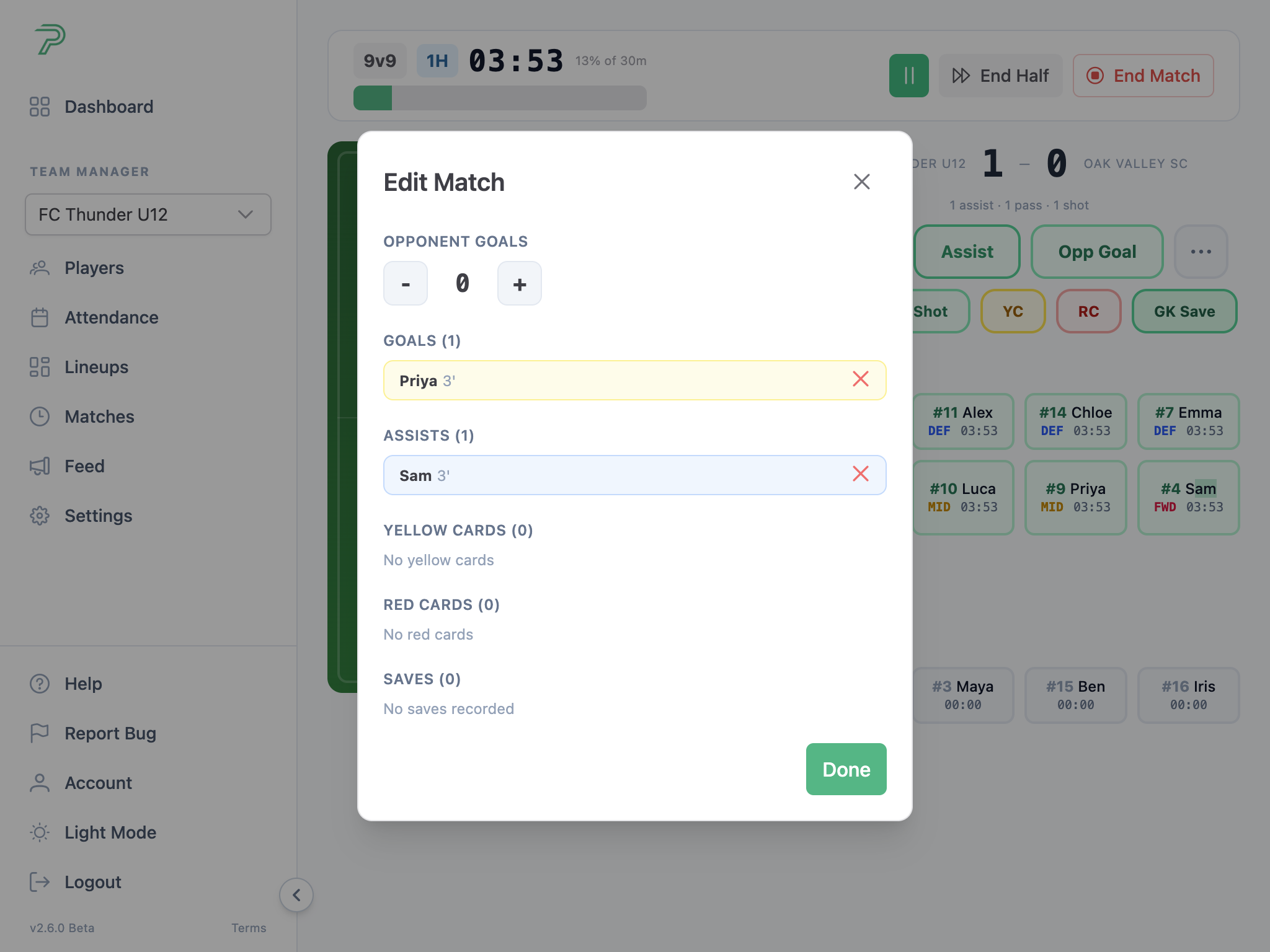 The in-game summary keeps goals, assists, cards, and saves editable without pulling the coach into a separate spreadsheet.
What Should Coaches Do With Game Stats After The Match?
Use game stats to guide feedback, planning, and recognition, not to rank young players publicly. The best post-game use is private coaching context.
Start with three questions. Who created chances? Who defended well in moments that did not show up in the score? Who played a new position and needs more support next week?
Then look for patterns over several games. One match can be weird because of weather, opponent strength, field size, or late arrivals. Three or four matches can show whether a player is getting enough touches, minutes, and position variety.
U.S. Soccer training-load guidance supports consistent records of game duration, content, and intensity. That does not mean every volunteer team needs advanced metrics. It does mean consistency helps coaches see development over time.
Keep safety and sideline attention ahead of data. U.S. Soccer’s environmental guidance reminds teams to manage heat, hydration, and game conditions responsibly. During hot or chaotic matches, a smaller stat sheet is the right choice.
Use the post-game record to plan one specific next action. Maybe your team needs more finishing reps. Maybe the midfield needs a clearer outlet pass. Maybe your goalkeeper deserves credit for saves that parents barely noticed.
Stats should make the next practice sharper. They should not make the sideline heavier.
The stat-to-question check
Choose the coaching question before the match starts. If the question is chance creation, record the pass or movement before the shot. If the question is defending, record the pressure, recovery, or failed transition that explains the goal. Review one pattern with the team at the next practice and drop stats that do not change an action.
Track Youth Soccer Goals And Assists Without Distraction FAQ
Should Youth Soccer Coaches Track Every Pass?
Most youth coaches should not track every pass live. It is too much for one sideline helper, and accuracy drops quickly without video or a dedicated analyst.
Track a small set of reliable events first. If your team later adds video review, you can study passing patterns after the match.
Should Parents Track Stats During Games?
Parents can track stats if the role is clear and calm. Give one parent the sheet, the definitions, and the reminder that the coach makes final decisions.
Avoid asking several parents to track the same thing. Too many records create more confusion than clarity.
How Do You Handle Disputed Assists?
Use your written definition and move on. If the touch was unclear, leave the assist blank or add a short note for post-game review.
Do not stop coaching to settle it during the match. The next play matters more than a disputed mark.
What Is The Minimum Stat Sheet For A Busy Sideline?
The minimum sheet is player number, goal, assist, shot, save, minute, and one note column. That gives you enough context for a useful post-game review.
If even that feels heavy, track only goals, assists, and minutes for one match. Build from there once the routine feels steady.
Should Coaches Share Individual Stats With Parents?
Share individual stats carefully and with development context. Young players should not feel reduced to goals, assists, or shot totals.
If parents ask, explain what you track and why. Focus on effort, role, playing time, and next steps.
The best stat system is the one your team can repeat on a messy Saturday. Pick a small live sheet, assign one reliable helper, and clean the record after the match. Your next practice plan will be better, and your eyes can stay where they belong during the game.