
What Positional Play Actually Teaches Young Players
Positional play for youth soccer is not about forcing a pro system. It teaches young players how to see space, support teammates, and make decisions.
Published · Updated
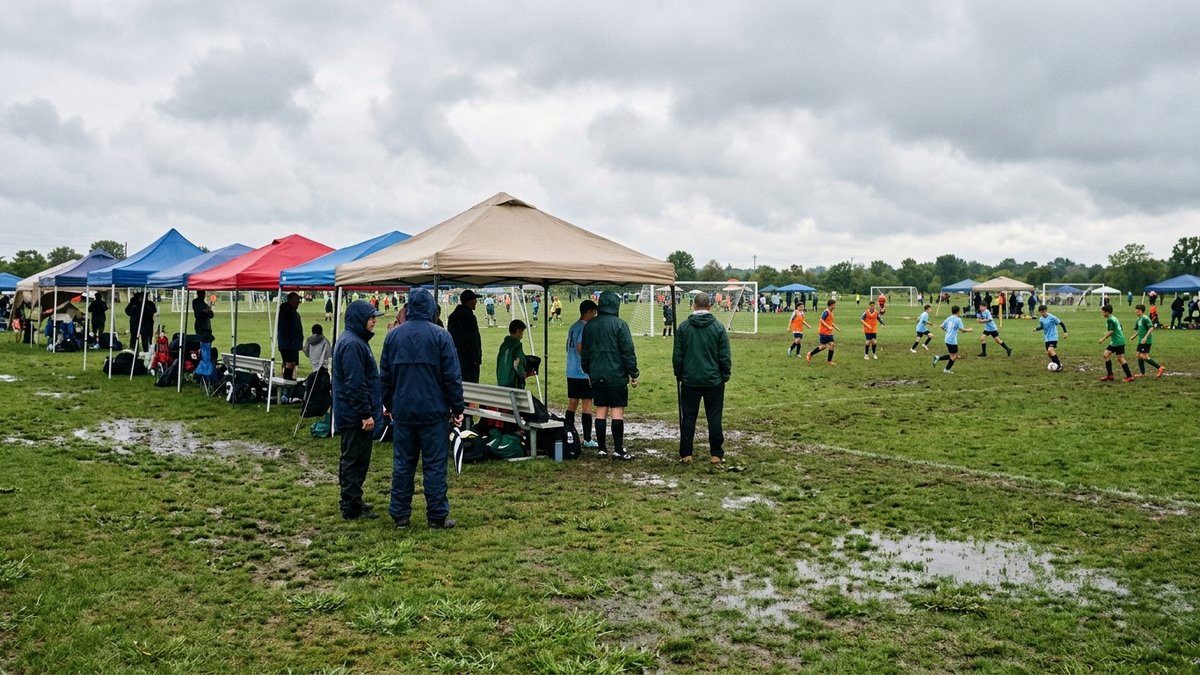
Positional play has become one of those soccer terms that makes youth coaches feel they either need a giant tactics board or should avoid the subject entirely.
Neither is true. At youth level, positional play is mostly about helping players stop standing in the same space and start seeing how their movement gives a teammate an easier decision.
What is positional play in plain language?
It is the habit of occupying useful spaces so the player with the ball has a better option. That is it.
If three teammates run toward the ball, the defender’s job gets easy. If one stays wide, one supports behind, and one threatens a space ahead, the player on the ball can see more than one answer. Young players do not need a lecture on zones to understand that.
What does it teach before tactics?
It teaches observation. Before a player can make a good positional decision, they have to notice where teammates, defenders, and open space are.
Spain’s David Gordo describes decision-making as central to the national team’s approach. Players need technical quality, but they also need to read the game, anticipate where they should be, and provide the best option for a teammate.1
For an U9 player, that might mean moving away from the ball after passing. For an U13 player, it can mean recognizing that a wide teammate is free because the center is crowded. The principle grows with the player.
How can you teach it without overcoaching?
Set up a game where the problem appears, then use one coaching point. Try 4v4 plus two neutral wide players. A team can score only after using a wide neutral player. Do not stop every time the ball goes central. Let players discover when the field is crowded, then ask what changed when they used the outside.
Another option is a 5v5 game with two end zones. A goal counts only when a player receives in the end zone after a pass from a teammate who has moved into a support angle. Keep the rules light. If the activity becomes a compliance test, players will look at the coach instead of the field.
U.S. Soccer’s Play-Practice-Play model puts players in game-like situations and asks coaches to facilitate rather than make every decision for them.2 That is a sensible fit for youth positional work.
When does structure hurt creativity?
Structure hurts when a player is punished for seeing a better solution. A coach who requires the ball to move through a certain zone every time is teaching obedience, not understanding.
Use positions as reference points. The right winger should know what width does for the team. They should also be allowed to come inside if the moment calls for it. The coach’s job is to help players understand the consequence of the movement, not to turn them into remote-controlled pieces.
What should you plan before the session?
Choose one question for the group. For example: “Where can you move so the player with the ball can see you?” Then choose a game where that question matters.
Keep track of which players have been asked to play wide, central, or deeper roles over the season. A soccer rotation generator or formation guide can help you avoid giving the same few confident players all of the decision-heavy roles.
What should players hear during the game?
Use prompts that send their attention back to the field. Ask, “Where is your next support angle?” or “What changed when the defender followed the ball?” Avoid shouting the answer before the player has time to see it.
At first, players may still bunch up. That is normal. The coach can pause briefly, show the distance between two teammates, and restart the game. Then step back. Positional awareness grows from many small corrections that players can connect to a real game moment.
Do not expect every player to understand space in the same way. One player may need to see a painted channel. Another may need to play wide for a whole round. A third may understand it immediately but need help knowing when to leave the space. Give the group a shared principle and let the learning look a little different from player to player.
How can you use positional play on match day?
Give the team one reminder before kickoff. For a young group, it might be, “When we have the ball, help the player who has it.” At halftime, use a real moment from the match: “Their defenders are all coming to the ball. Who is free when that happens?”
Keep the message smaller than the game. A coach does not need to win a tactics debate on the sideline. They need to help players recognize one picture and make a better choice the next time it appears.
What should a parent understand about this work?
Players may look less organized before they look more organized. A coach who asks an U10 player to make their own support decision will see mistakes. That does not mean the team has no plan. It means the players are being asked to process the game rather than wait for a command.
The useful question after a match is whether players were beginning to see the spaces the coach trained. If they were, keep building. If they were not, simplify the next problem and give them another chance.
How do you keep the idea connected to the ball?
Do not teach space as an abstract diagram. Show players that their movement changes a teammate’s first touch, passing lane, or chance to turn. When the team is wide, the middle can open. When a player supports behind the ball, a teammate has a safe pass.
That direct connection makes positional play useful to young players. They are not memorizing a map. They are helping the next action happen.
The space-to-action test
Give the group one space problem and watch what happens after the ball moves. If players crowd the ball, freeze the shape and ask who can provide width or depth. If they keep the shape but stop looking at the next pass, add a constraint that requires scanning before receiving. The next session should show one visible change in where players stand or what they see. Build that constraint in the soccer session planner and keep role notes beside the lineups and formations guide.
FAQ
Is positional play too advanced for U9 soccer?
No. The language should be simple. U9 players can learn to spread out, support the player with the ball, and move after passing.
Does positional play mean every team must use a 4-3-3?
No. Formation and positional principles are different. Use the format and shape that fits your team, then teach players how to use space within it.
Should coaches stop the game every time players bunch up?
No. Let the game show the consequence first. Use short interventions when players need help seeing the problem.
What is the first positional play habit to teach?
Teach players to move after passing. It immediately creates a new angle and keeps them involved in the next action.
Sources
Footnotes
-
FIFA Training Centre: David Gordo on Spain’s playing style, March 4, 2025. ↩
-
U.S. Soccer: Five Things to Know About Play-Practice-Play, February 2018. ↩