
What U.S. Youth Soccer Can Copy From Spain, and What It Cannot
Spain offers useful lessons for U.S. youth soccer, but copying a formation or academy label will not fix short-term incentives.
Published
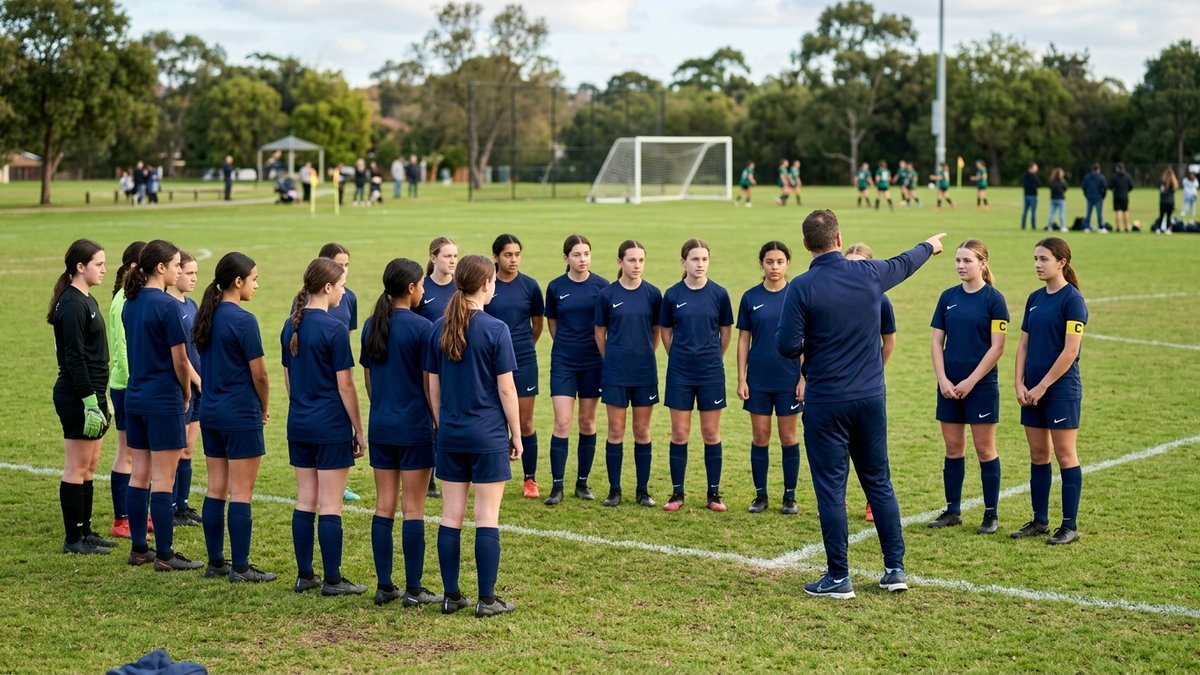
Spain is a useful model. Spain is not a copy-and-paste plan for American soccer.
The U.S. has different geography, different club structures, different costs, and a much more fragmented set of competitions. Pretending those differences do not exist leads to the usual shallow advice: play like Barcelona, use more rondos, call it development.
What should American soccer copy from Spain?
Copy the idea that a player development model needs to be visible before the senior level. Spain’s youth national teams work from a possession-based identity that values technical skill, game understanding, and decision-making.1
That does not require every U.S. club to run the same formation. It requires each club to answer basic questions consistently. What do we want an U10 player to do when they receive under pressure? How do we teach a player to react after losing the ball? What does progress look like besides a tournament finish?
Germany offers a related lesson. Its current training philosophy puts players at the center and names joy, intensity, and repetition as quality features of child and youth training.2 The useful pattern is not national imitation. It is taking youth coaching seriously enough to define the player experience.
What cannot be copied quickly?
You cannot import a football culture in a preseason. Spain’s system sits inside a country where clubs, regional federations, schools, coaches, and players have a long history with the sport. Brazil’s own federation has said that the country’s regional differences make it difficult to define one institutional way of playing everywhere.3
That is a helpful warning. Even countries with deep football cultures are not uniform. The United States should stop waiting for one perfect national style to solve every local problem.
Is pay-to-play the whole problem?
No. It is a major pressure point because high family costs make parents feel they need immediate proof of value. But the deeper problem is the incentive loop around it.
Families pay, travel, compare rankings, watch other clubs recruit, and fear falling behind. Clubs know that a bad stretch can cost them players. Coaches know that a parent complaint can become a roster problem. Everybody says the long term matters, then the system measures the short term loudly.
That does not make parents villains. Parents are responding to a market that asks them to make expensive, uncertain choices for their children. It does mean clubs need to communicate their standards before results force the conversation.
What can a club change this season?
Start with a short development promise for each age group. At U9, it might include confidence on the ball, equal learning opportunities, and lots of game involvement. At U12, it might add receiving under pressure, playing with width, and understanding simple roles in transition.
Then make the promise operational. Review player minutes. Rotate some roles. Give coaches session themes that match the promise. Share the season goals with parents. A playing time tracker can make the rotation conversation more concrete when the sideline gets emotional.
The club should also own the hard part. If it says development matters, it cannot abandon a coach at the first losing weekend for trying to coach development.
What should a parent look for in a development program?
Watch a training session before you judge the logo, league, or social media account. Are players active? Does the coach explain a useful idea, then let them play? Are mistakes treated as information or embarrassment? Does the club have a clear answer about age groups, positions, and player movement?
Then ask how the program handles a bad month. That answer tells you more than a list of wins. A club that can explain what it protects when results dip is more likely to be serious about development.
Parents should also be honest about what they want. If the family needs an environment where the strongest lineup plays every close match, say that. Do not join a club that promises a longer view, then punish the coach for delivering it.
What is the realistic first step for U.S. soccer?
It is not a national declaration about one formation. It is a common, plain definition of age-appropriate progress that clubs can explain to families and coaches can use on the field. The U.S. already has useful small-sided standards and coaching resources.4 The next step is helping local environments live up to them when the pressure rises.
How should a club handle the conflict between development and results?
Say where competition belongs. Teams should try to win. Players should learn to handle the consequence of a bad pass, a missed chance, and a difficult opponent. But a club should decide in advance what it will not sacrifice for one result. That may include playing every athlete in meaningful moments, asking players to build from the back, or giving a developing player time in a new role.
Those choices will sometimes cost a game. They can also show a player that the adult believes they are capable of learning the harder version of soccer. That is a much better long-term message than giving every important touch to the safest option on the field.
The useful comparison with Spain is not about pretending American soccer can change overnight. It is about building the kind of consistency that lets a player hear the same useful ideas long enough for them to matter.
What would success look like in five years?
It would look like more players arriving at U13 able to receive, pass, and understand simple game problems. It would look like more coaches with support instead of isolation. It would look like parents who can recognize progress without needing a trophy every weekend.
That is not a promise that every player becomes elite. It is a better baseline for every player who loves the game.
It also gives coaches a fairer job. They can be judged by the quality of the environment they create, the learning they make visible, and the way they respond when a player struggles. Wins still count. They just stop carrying the entire argument by themselves.
FAQ
Should U.S. clubs copy Spain’s formation?
No. Start with player habits and age-appropriate game principles. A formation is only a starting shape.
Is pay-to-play the only reason youth soccer has development problems?
No. It adds pressure, but competition design, parent expectations, coach support, and club incentives all affect decisions.
What can a coach do without club support?
Set a clear weekly training goal, use game-like activities, communicate the goal to families, and review who is receiving meaningful learning opportunities.
Does the U.S. have any useful development standards already?
Yes. U.S. Soccer’s small-sided standards were designed to create more involvement, touches, and decision-making opportunities for young players.4
Sources
Footnotes
-
FIFA Training Centre: David Gordo on Spain’s playing style, March 4, 2025. ↩
-
DFB: Training Philosophy Germany, accessed July 20, 2026. ↩
-
CBF: Event focused on developing new talent, April 27, 2026. ↩
-
U.S. Soccer: Five Things to Know About Small-Sided Standards, August 1, 2017. ↩ ↩2