
Spain vs. USA Youth Soccer Training Sessions: The Useful Differences
The Spain versus USA training question is not about better drills. It is about what each session asks players to notice, repeat, and solve.
Published
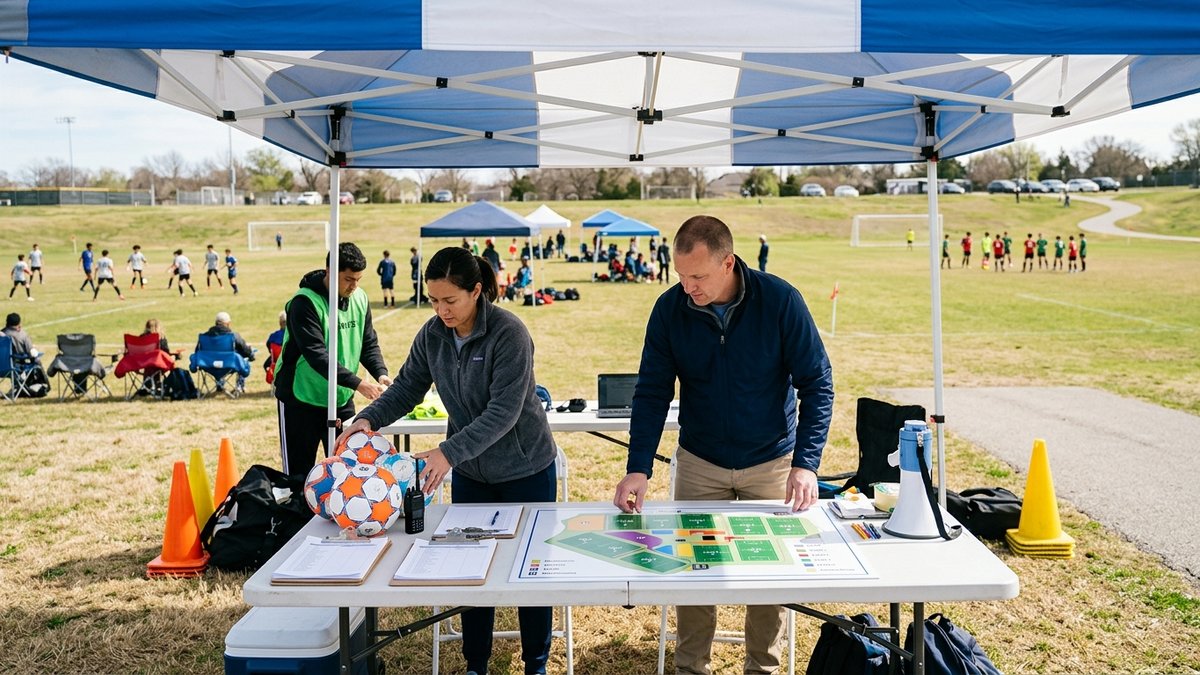
There is no single Spanish youth soccer session. There is no single American one either. Both countries have excellent coaches, poor sessions, thoughtful clubs, and rushed environments.
The difference worth studying is what a session is designed to produce. Is it a place for players to repeat a coach’s pattern, or a place where they get many chances to see, decide, and execute under pressure?
What should a good youth session start with?
Start with the game problem, not the drill name. If the team struggles to play out under pressure, decide whether the players need better support angles, calmer first touches, or a clearer picture of where the free player is.
Then build a progression that lets them work on that problem. Begin with a small game that exposes it. Add a practice activity that gives players more repetitions. Finish with a game where they must choose whether to use the behavior. That is close to U.S. Soccer’s Play-Practice-Play framework.1
Where do American sessions often go wrong?
They can be too organized around adult control. Players wait in lines. Coaches freeze the game so often that players wait for instructions. The activity may look clean, but the player gets few touches and even fewer real decisions.
Another problem is trying to jump from basic technique straight to a senior-team pattern. If U12 players are still learning to pass, receive, and control the ball, a complex buildup pattern will not solve the gap. The session needs enough technical work, with pressure and purpose added in stages.
What does a Spain-inspired session emphasize?
It emphasizes the habits behind the play. Spain’s David Gordo describes a model where players need to control and pass the ball, anticipate where they should be, recognize whether there is space to play forward, and react quickly after a turnover.2
That could be trained in a 4v4 plus neutrals game. It could be trained in a 7v7 build-out game. The exercise is not sacred. The repeated decisions are.
How should the session change by age?
At U8, keep it playful and full of ball contacts. The field should feel alive, not like a waiting room. At U10, add simple language about supporting a teammate and recognizing space. At U12, use larger formats when you need to teach width, transition shape, or switching play. At U14, connect the smaller games to the team behaviors needed on the bigger field.
U.S. Soccer’s small-sided standards exist for a reason. Fewer players and smaller spaces increase meaningful involvement, touches, and decision-making opportunities.3 Use them as a development tool, not as the only format a player ever sees.
What can a coach change tomorrow?
Take one line drill and give it a defender, a direction, and a decision. If players are passing in pairs, add a gate and ask the receiver to choose which side to escape. If they are shooting without pressure, add a recovering defender or a choice of two goals.
You do not need to make every session complicated. You need to make the player think at least as much as they run.
How should a coach judge whether an activity is working?
Watch the players who are usually quiet, not only the best player. Are they involved enough to make decisions? Is the activity producing the problem the coach intended? If players can succeed without looking up, moving, or communicating, the game may be too easy or the rule may be training the wrong thing.
Then adjust one part. Make the space a little smaller. Add a neutral player. Change the scoring condition. Give the group another round before explaining too much. Good session design is not about finding a magic drill. It is about noticing what the activity is actually asking players to do.
That is why a session plan should include a note after training. Write down what created the best decisions, where the group got stuck, and which player needs a different challenge next time. The next practice should begin from that information, not from a random new activity found ten minutes before training.
What does a complete session feel like for a player?
The player should spend most of the hour involved. They should touch the ball often, have a few hard choices, and get a chance to try again after a mistake. They should know one thing the coach wanted them to notice.
That does not mean there can never be a technical explanation or a short demonstration. It means the explanation earns its place by helping the next round of play. When the coach talks longer than the players play, the activity has lost its purpose.
How can a coach manage different ability levels?
Change the problem before you separate the players. Give an advanced player fewer touches, a smaller target, or a more difficult starting position. Give a newer player an extra support option or a clearer visual reference. Both players can still work on the same team idea.
That matters in U.S. youth soccer, where a single roster can include children with very different soccer backgrounds. A good session makes the shared game accessible without pretending every player needs the same task.
What should players remember when practice ends?
Give them one sentence they can take home: look before receiving, move after passing, or find a teammate when you win the ball. That is enough. A clear idea repeated over weeks does more than a long list of corrections that disappears in the car ride home.
Write that sentence into the next session plan. When the same idea appears again, players begin to recognize that training is connected from week to week. That connection is what turns a useful activity into coaching.
It gives their effort a direction.
FAQ
Are Spanish youth sessions all possession drills?
No. The useful principle is not endless passing. It is technical, decision-based football with a clear idea of how the team wants to play.
Should coaches eliminate unopposed technical work?
No. Use it when players need to learn a movement or build confidence, then move toward a game problem where the skill must be chosen under pressure.
How do you keep a session from becoming too tactical?
Use age-appropriate language and let players play. Give one clear question instead of ten instructions.
Should U12 players always train in their match positions?
No. They need some role awareness, but they also need chances to experience different parts of the game.
Sources
Footnotes
-
U.S. Soccer: Five Things to Know About Play-Practice-Play, February 2018. ↩
-
FIFA Training Centre: David Gordo on Spain’s playing style, March 4, 2025. ↩
-
U.S. Soccer: Five Things to Know About Small-Sided Standards, August 1, 2017. ↩