
Track Player Minutes By Position Fairly In Soccer
Learn how youth soccer coaches can track player minutes by position, spot season-long gaps, and keep development fair across the roster.
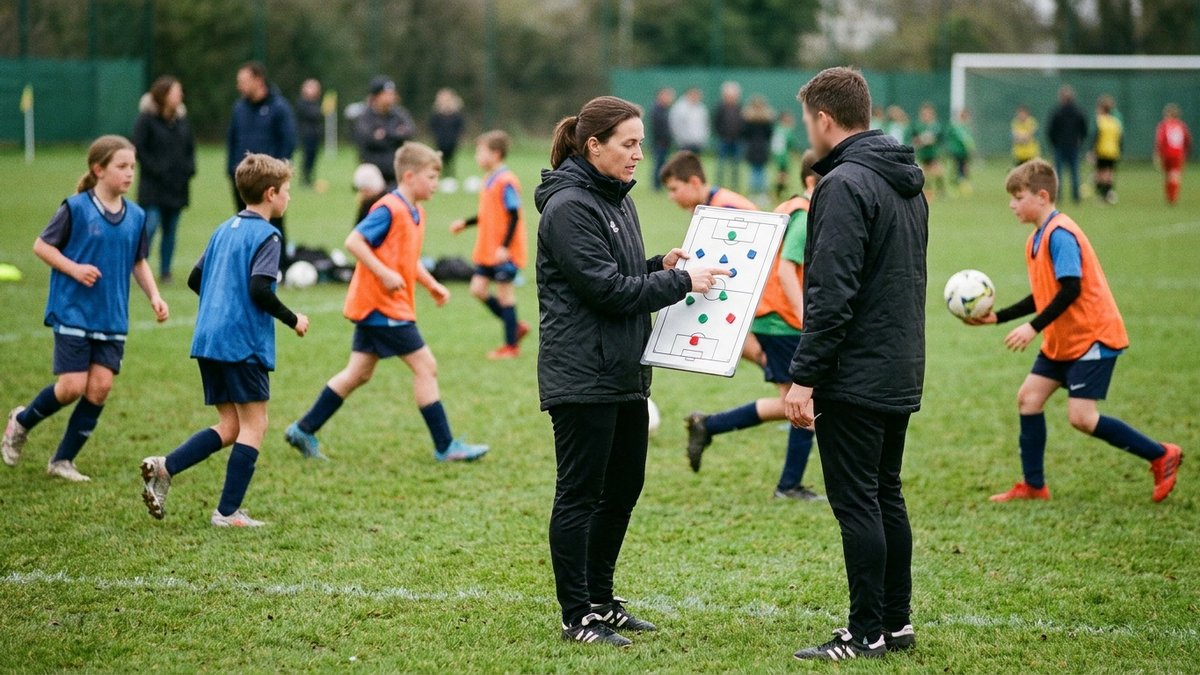
Recording player minutes by position gives youth soccer coaches a clearer picture of fairness than total playing time alone. A player can hit a 50% target every weekend and still spend the whole season stuck at fullback, goalkeeper, or the same wide role. The goal is not perfect symmetry in every match. The goal is fair access to learning moments across the season.
Why Should Coaches Track Minutes By Position?
Coaches should track minutes by position because total playing time does not show whether players are getting fair development opportunities. A child who plays 30 minutes every match at the same defensive spot may be treated fairly on paper, but they may not be learning the game from enough angles.
Youth soccer development depends on repeated exposure to different decisions. A center midfielder learns pressure and scanning in one way. A wide player learns timing, space, and recovery runs in another. A defender learns body shape, cover, and patience. When coaches only track total minutes, they miss whether those learning chances are being shared.
This matters most in younger age groups, where participation and development carry more weight than match results. US Youth Soccer’s U6 playing rule, distributed through local association rules, lists a minimum of 50% playing time for each player. That number is useful because it gives coaches a floor, but it does not answer the position question.
Game length also changes the math. US Soccer age-group game length guidance lists U9 and U10 matches as two 25-minute halves, while U11 and U12 are listed as two 30-minute halves. A fairness target should always be calculated from the actual match length and the actual roster available that day, not from a generic 90-minute adult game.
A simple way to think about it is this: fair development is equal access to learning moments. We call this the Learning Minutes Map. It asks two questions after every match. Did each player get a reasonable share of the minutes, and did those minutes expose them to more than one useful soccer problem over time?
What Should Coaches Record During Each Match?
Coaches should record the player, position, entry time, exit time, and any unusual reason for the change. Those five details are enough to rebuild the match accurately after the final whistle.
You do not need a complicated scouting report. You need a reliable game log. For each substitution, note who came on, who came off, what position changed, and what the match clock showed. If a player arrived late, left injured, needed a break, or was held out for behavior or safety reasons, write that down too.
The reason field protects the coach later. Without context, a parent may see that one player had 18 minutes while another had 34 and assume the rotation was unfair. With context, the coach can explain that one player arrived 12 minutes late, another had a knock, and the next match will be adjusted to bring the season balance back into range.
Digital tracking helps because sideline attention is limited. During a tight U10 game, the coach is watching the ball, managing the bench, answering a parent’s quick question, and trying to remember who has already played goalkeeper. A paper clipboard works until three substitutions happen during a water break. A live tracker lowers the chance that a rushed note becomes a season-long fairness problem.
If you use Pitch Planner’s Match Day tracker for live playing time, the practical habit is the same: start the match with the roster and lineup set, make substitutions as they happen, and review the summary afterward. The tool matters less than the discipline. Minutes have to be captured in real time, not reconstructed from memory in the parking lot.
How Do You Visualize Player Minutes Fairly Across The Season?
The fairest season view is a stacked bar chart by player, with each color showing a position and the total bar showing total minutes. This gives coaches a fast way to see both playing time balance and position diversity.
A total-minutes chart answers only one question: who played more or less? A stacked chart answers the better question: where did those minutes happen? If Maya has 300 total minutes and 260 came at center back, that is a different development story than a teammate with 300 minutes split across defender, midfield, and forward.
A second useful view is a cumulative minutes line chart. Each player’s line rises after every match. If one line starts drifting far below the team cluster, the coach can adjust the next two games before the gap becomes emotional. This is especially helpful in seasons with tournaments, rainouts, late arrivals, and guest players.
A heat map is the best staff view. Put players down the left side and positions across the top, then shade each cell based on minutes played. Blank cells are not automatically bad. A goalkeeper may not need the same field rotation as a winger. But blanks show where the coach should ask a development question before the season gets away.
For one-match management, a rotation grid is still useful. It shows who is on during each five, six, eight, or ten-minute segment. The season chart tells you whether the plan is fair over time. The match grid tells you whether you can actually run the plan from the sideline.
How Much Position Rotation Is Enough For Youth Players?
Enough position rotation means every player gets age-appropriate exposure to more than one role over a meaningful block of games. The exact amount depends on age, roster size, player safety, and the team’s competitive level.
For U6 through U10, broad rotation is usually best. Players are still learning the shape of the game. They benefit from seeing the field as an attacker, a defender, and a central or wide player when the format allows it. You do not need to force every child into every role every weekend, but you should avoid letting early confidence or size lock a player into one job.
For U11 and U12, rotation can become more intentional. A player may begin to show stronger instincts in certain roles, but that does not mean development should narrow too quickly. A defender who occasionally plays midfield learns what passing options a midfielder needs. A forward who spends some time wide learns defensive recovery and spacing.
For older youth teams, position tracking still matters, but fairness may look different. Coaches may use wider target ranges because the game is more tactical and roles are more specialized. Even then, a player who is chronically underused or permanently stuck in a low-touch role needs a clear developmental explanation.
The Learning Minutes Map helps here because it separates equal minutes from equal development. Equal minutes ask, “Did everyone play the same amount?” Fair development asks, “Did each player get enough meaningful time in roles that help them grow?” The second question is more honest, and it is easier to defend when you have records.
How Should Coaches Handle Parent Questions About Playing Time?
Coaches should answer parent questions with a clear policy, season-long records, and a calm explanation of how future games will be adjusted. Data should reduce emotion, not become a weapon.
The best time to explain the policy is before the first match. Tell families whether your team is aiming for equal minutes, a minimum percentage, a season target range, or a hybrid model based on age and attendance. Parents do not need every tactical detail, but they do need to know what fairness means on this team.
When a question comes after a game, avoid debating from memory. Say what the record shows. If a player was short this weekend, explain whether it was because of attendance, injury, rotation timing, or a coaching mistake. Then name the next step, such as giving that player an earlier first-half shift in the next match or rotating them into a different role over the next two games.
This is where a team hub helps. A coach or manager can keep the roster clean, track availability, and reduce last-minute surprises before match day. Pitch Planner’s team manager tools are useful for this because fair playing time starts before kickoff, when the coach knows who is available and where each player can safely play.
Be careful about sharing too much. You can explain a player’s own minutes to their family without turning the whole roster into a public ranking. A good parent conversation should leave the family feeling heard and leave the coach with a practical adjustment, not create a comparison chart that follows kids around the sideline.
The Learning Minutes Map Framework
The Learning Minutes Map is a four-step review coaches can run after every match. It turns a messy substitution day into a practical season plan.
First, check the floor. Did every available player meet the team minimum or get a documented reason for falling short? For younger teams, that floor may be close to 50%. For older teams, it may be a broader range tied to attendance, effort, and role.
Second, check the gap. Look at the difference between the most-used and least-used players across the season, not just today. One strange match is normal. A five-match pattern is a coaching decision, whether intentional or not.
Third, check the role mix. Review each player’s position chart and ask whether the pattern supports their development. Some players will naturally concentrate in one or two positions, but the chart should reflect a choice, not a habit caused by sideline chaos.
Fourth, plan the correction. Pick one or two adjustments for the next match. Maybe a low-minute player starts the next half. Maybe a defender gets 10 minutes in midfield. Maybe an early substitute window is planned so the same kids are not always waiting until the final stretch.
This review does not need to take an hour. Ten minutes after the game is enough if the match log is accurate. The benefit is that coaches stop making fairness decisions under pressure and start making them from evidence.
What Is The Best Match-Day Workflow For Coaches?
The best match-day workflow is to plan the rotation before kickoff, track every substitution live, and review the season balance after the final whistle. That rhythm keeps the coach focused during the game and accountable after it.
Before kickoff, build the lineup from the players who are actually present. Confirm injuries, late arrivals, and any role limits. If you have 12 players for a 60-minute match and want near-equal time, the rough target is 30 minutes per player. That does not mean every player must land on exactly 30, but it gives the coach a number to steer toward.
During the match, keep substitution windows predictable. Many coaches like five, six, eight, or ten-minute rhythms because they are easy to remember and reduce bench confusion. The exact interval matters less than consistency. If the game gets chaotic, a predictable rhythm gives the coach something to return to.
After the match, review the summary while the game is still fresh. Look for three things: who missed the target, who played only one role again, and what needs to be corrected next time. If the team uses Pitch Planner’s match-day tools for substitutions and summaries, this review can become part of the normal final-whistle routine instead of another spreadsheet chore. For a live record that stays open during the game, use the time tracker guide.
The most important habit is to close the loop. Tracking without adjustment is just recordkeeping. Tracking plus correction is coaching.
The total-versus-role check
Read the record in two passes. If the family question is fairness, answer with total minutes and the match context. If the coaching question is development, choose the next role from the player’s position history. At the next game, log one intentional role change and one reason so the visual record guides the lineup instead of merely decorating it.
Track Player Minutes By Position Fairly In Soccer FAQ
Should Youth Soccer Players Get Equal Playing Time?
Younger youth players should usually get near-equal or minimum-guaranteed playing time, especially in recreational and developmental environments. Older or more competitive teams may use broader target ranges, but coaches should still avoid chronic underuse without a clear reason.
Is Fair Playing Time The Same As Equal Minutes?
Fair playing time is not always the same as equal minutes. Equal minutes measure time only, while fair development also considers position exposure, attendance, injuries, effort, safety, and age-appropriate team goals.
What Is The Easiest Chart For Showing Position Minutes?
A stacked bar chart by player is usually the easiest chart for showing position minutes. It lets coaches see total minutes and position distribution in one view, which makes it easier to spot players who are overused in one role.
How Often Should Coaches Review Playing Time Data?
Coaches should review playing time after every match and look for bigger patterns every three to four games. The post-game review catches obvious misses, while the multi-game review shows whether the season is staying balanced.
Should Coaches Share Playing Time Charts With Parents?
Coaches can share a player’s own minutes with that player’s family, but they should be cautious about publishing full-team comparisons. The better approach is to share the team policy, explain individual records privately, and show how the coach plans to correct gaps.
Can A Digital Tracker Replace Coaching Judgment?
A digital tracker cannot replace coaching judgment. It gives the coach better evidence, but the coach still has to account for safety, confidence, game context, and what each player needs next.
Position-based minute tracking gives coaches a calmer way to manage fairness. Start with a simple log, review the season pattern, and make one correction at a time. When players get a fair share of both minutes and learning moments, the whole roster has a better chance to develop.
NEXT STEP FOR LINEUPS
Build the shape before the first whistle.
Choose the formation, assign player roles, and keep the saved lineup close when match setup starts.